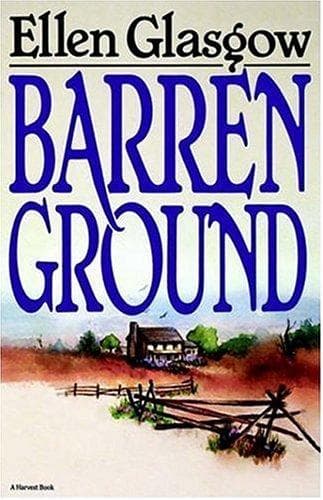
Country life -- Fiction; Pastoral fiction; Piedmont (U.S. : Region) -- Fiction; Virginia -- Fiction
At sunset, when Nathan Pedlar came for his daily visit, Dorinda walked
over a part of the farm with him. He was wearing his Sunday suit of
clothes, and though this emphasized his grotesqueness, it increased also
the air of having been well scrubbed and brushed which had distinguished
him from the other farmers at the station. Since his wife's death he had
prospered, as widowers were so frequently known to do, Dorinda
reflected; and now that he was able to employ an assistant, he was not
closely confined to the store. Though his neighing laugh still irritated
the girl, she found herself regarding his deficiencies more leniently.
After all, he was not to blame for the way he looked; he was not even to
blame, she conceded less readily, for the things that he thought funny.
Since that fantastic humour had taken root in her mind, she had been
continually puzzled by the variety of obvious facts which people, and
especially men, found amusing. She could not, to save her life, laugh at
the spectacles they enjoyed, nor did the freakish destiny that provoked
her to merriment appear to divert them at all. From the cool and
detached point of view she had attained, life appeared to her to be
essentially comic; but comic acts, whether presented in the theatre or
in the waggish hilarity of Pedlar's Mill, seemed to her merely
depressing. She was not amused by the classic jokes of the period, which
were perpetually embodied in a married man who was too fat or an
unmarried woman who was too thin. Flesh or the lack of it, hats or the
pursuit of them, crockery or the breaking of it; none of these common
impediments to happiness possessed, for her, the genuine qualities of
mirth. But reprehensible though she knew it to be, she could not recall
the misguided earnestness of her girlhood without the pricking of
ridicule; and the image of mankind strutting with pompous solemnity into
the inevitable abyss impressed her as the very spirit of comedy. Tragic
but comic, too, as most tragedy was. Would it ever pass, she wondered,
this capricious and lonely laughter?
"I can't help it," she thought, walking by Nathan's side, and listening
soberly to his story of a coloured woman who had tried to make him pay
an additional price for a chicken with three legs. "I can't help it if
they, not the things they laugh at, seem funny to me."
It was a misty, lilac-scented afternoon in April. The sun shone softly
when it began to go down, as if it were caught in a silver scarf, and
the grass in the pear orchard was white with drifting blossoms. Those
old trees always bloomed late, she remembered, and the ground was still
snowy with fallen petals when the lilac bushes by the west wing were
breaking into flower.
Public-domain text, read in full here on John Shaqi.
Reviews
Reviews
No reviews yet
Be the first to share your thoughts on this work.
Elsewhere in the archive
Join the Discussion
Join the discussion
Sign in to leave a comment or review.
Sign InorCreate an account