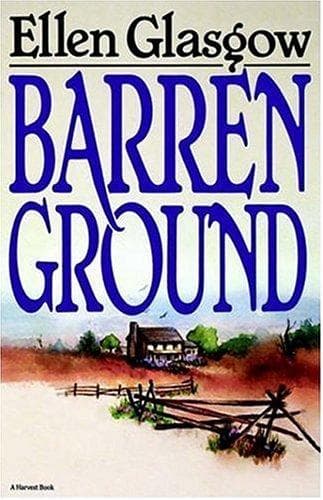
Country life -- Fiction; Pastoral fiction; Piedmont (U.S. : Region) -- Fiction; Virginia -- Fiction
When the neighbours had driven solemnly out of the gate, the family
assembled in Mrs. Oakley's chamber and gazed through the window to the
graveyard on the hill, as if they were waiting expectantly for the dead
man to rise and return to his work. The only change would be, they
acknowledged, that two hired labourers would grumble over a division of
the toil which Joshua had performed alone and without a complaint. The
farm had always belonged to Mrs. Oakley; but in order that her authority
might be assured, Joshua had made a will a few months before his death
and had left her the farm implements and the horses. Dissimilar as her
parents had appeared to be, there was a bond between them which Dorinda
felt without comprehending. This was the growth of habit, she supposed,
or the tenacious clinging of happy memories which had survived the frost
of experience. In his dumb way, Joshua had been proud of his wife, and
Eudora had depended upon her husband for more substantial qualities than
those of sentiment. He had been useful to her in the practical details
of living, and she was feeling his loss as one feels the loss of a
faculty. Here was another proof, Dorinda reflected, of the varied
texture of life, another reminder of her folly in attempting to weave
durable happiness out of a single thread of emotion.
"I don't see how we'll manage to get on without him," said Mrs. Oakley,
who looked gaunt and bleached in the old mourning she had worn for her
dead children.
"I reckon it means I'll have to stay on here," Rufus muttered in a tone
of sullen rebellion. "I'll have to give up that job Tom Garlick promised
me next winter in New York. It's darn luck, that's what I call it."
"Oh, no, you mustn't stay," Dorinda urged. "Ma and I can get on
perfectly by ourselves. It won't make any difference if you go in the
fall."
"You'd better take Dorinda's advice and get away, Rufus." Though Mrs.
Oakley spoke in a quiet voice, her face had gone grey at the thought of
losing Rufus also.
"Well, I'm afraid I can't help you now," said Josiah, glancing furtively
at his wife, who had proved to be a termagant with generous impulses
which were brief but explosive.
"Of course your Ma could always come to live with us," suggested Elvira,
obeying the briefest of these impulses. "She'd find plenty to do looking
after the chickens, and the children would keep her from being
lonesome."
Mrs. Oakley's eyes filled with tears. The old hound, having outlived his
master, lay at her feet, and stooping over she stroked his head with a
trembling hand. "But what would become of the farm?" she asked in a
voice that quavered. "I want to die on the farm where I was born."
"We'll stay here alone, Ma and I," Dorinda declared, with the stern
integrity she had won from transgression. "The farm belongs to Ma, and
she and I can take care of it. We don't need a man," she added crisply.
"If I couldn't do better than the men about here, I'd be a mighty poor
farmer."
Public-domain text, read in full here on John Shaqi.
Reviews
Reviews
No reviews yet
Be the first to share your thoughts on this work.
Elsewhere in the archive
Join the Discussion
Join the discussion
Sign in to leave a comment or review.
Sign InorCreate an account