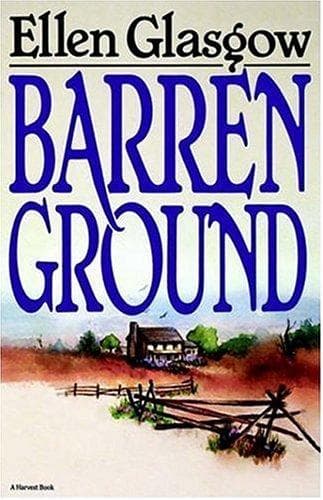
Country life -- Fiction; Pastoral fiction; Piedmont (U.S. : Region) -- Fiction; Virginia -- Fiction
Now, in the soft afternoon light, she stretched her arms over her head
with a gesture of healthy fatigue. The aromatic scent of the pine was in
her nostrils. In the sun-steeped meadows below there was the murmurous
chanting of grasshoppers. At the hour she felt peaceful and pleasantly
drowsy, and all her troubles were lost in the sensation of physical
ease. She was thinner than ever; her muscles were hard and elastic; the
colour of her skin was burned to a pale amber; and the curves of her
rich mouth were firmer and less appealingly feminine. In a few years the
work of the farm would probably coarsen her features; but at
twenty-three she was still young enough to ripen to a maturer beauty.
Though her hands were roughened by work and the nails were stained and
broken, she wasted no regret upon the disfigurement of her body as long
as her senses remained benumbed by toil. She slept now without dreaming.
This alone seemed to her to be worth any sacrifice of external softness.
Her glance travelled over the cornfield, where the shocks were gathered
in rows amid the stubble, and she reflected that the harvest had been
better than usual. Then her eyes passed along the orchard path to the
new cow-barn, and she watched the figure of William Fairlamb climbing
down from the roof. An agreeable sense of possession stole into her
mind, while she looked from the cow-barn to the back of the house, and
saw her mother moving along the path from the porch. There were a
hundred and fifty hens in the poultry yard now, and it seemed to Dorinda
that the old woman's happiness had simmered down into an enjoyment of
chickens. Though she still worshipped Rufus, he was only a
disappointment and an increasing anxiety. Of late he had done no work on
the farm; his days were spent in hunting with Ike Pryde or Adam Snead,
and it was evident to Dorinda that he was beginning to drink too much
bad whiskey. It would be a relief, she felt, when November came and he
went away for the winter.
Turning her head, as she prepared to leave the graveyard, she glanced
beyond the many-coloured autumn scene to the distant chimneys of Five
Oaks. How far-off was the time when the sight of those red chimneys
against a blue or grey sky would not stab into her heart? Her love was
dead; and her regret clung less to the thought that love had ended in
disappointment than to the supreme tragedy that love ended at all.
Nothing endured. Everything perished of its own inner decay. That, after
all, was the gnawing worm at the heart of experience. If either her love
or her hatred had lasted, she would have found less bitterness in the
savour of life.
Public-domain text, read in full here on John Shaqi.
Reviews
Reviews
No reviews yet
Be the first to share your thoughts on this work.
Elsewhere in the archive
Join the Discussion
Join the discussion
Sign in to leave a comment or review.
Sign InorCreate an account