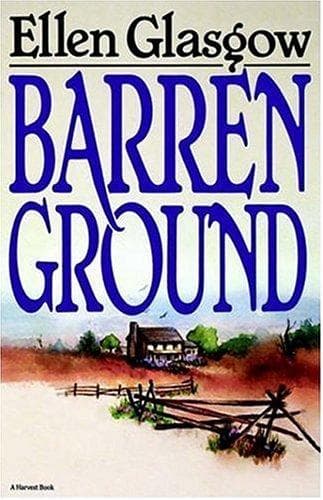
Country life -- Fiction; Pastoral fiction; Piedmont (U.S. : Region) -- Fiction; Virginia -- Fiction
Lifting her hand from her eyes, she brushed a lock of hair back from her
forehead and glanced down at the blue and white gingham dress she had
put on for dinner. Of late she had fallen into the habit of powdering
her face with her pink flannel starch bag and changing into a clean
dress before dinner. Her life, she knew, was becoming simplified into an
unbreakable chain of habits, a series of orderly actions at regular
hours. Vaguely, she thought of herself as a happy woman; yet she was
aware that this monotony of contentment had no relation to what she had
called happiness in her youth. It was better perhaps; it was certainly
as good; but it measured all the difference between youth and maturity.
She was not old. At thirty-eight, she was still young; and there were
moments in the spring when her tranquillity was shot through with arrows
of flame. Her romantic ardour lay buried under the years, but she
realized now and then that it was still living.
"Dar dey is!" exclaimed Nimrod behind her, and immediately afterwards
she heard Fluvanna's voice inquiring if it "wasn't time to begin dishing
up dinner?"
Across the fields the men were walking slowly, Nathan and John Appleseed
a little ahead, the others straggling behind them, with John Abner
limping alone at a distance. She would have recognized Nathan's loping
walk as far-off as she could distinguish his figure, and John Abner's
limp never failed to awaken a sympathetic feeling in her bosom. Of the
four children, he was the only one who had grown into her life. Minnie
May was married and the unselfish mother of an anæmic tow-headed brood;
Bud was working his way to the head of the wholesale grocery business;
and Lena had developed into a pretty, vain, empty-headed girl, who had
been engaged half a dozen times, but had always changed her mind before
it was too late. She attracted men as naturally as honey attracts flies,
and since she was troubled by neither religion nor morality, her
stepmother's only hope was "to get her safely married before anything
happened." For John Abner, Dorinda felt no anxiety beyond the maternal
one which arose from his lameness and his delicate health. He had been a
comfort to her ever since he had come to the farm; and yet, in spite of
John Abner and the knowledge that she had married from fear of a
solitary old age, she realized that she was still lonely. Evidently,
whatever else marriage might prevent, it was not a remedy for isolation
of spirit.
As Nathan reached the porch he fumbled in the pocket of his overalls and
drew out a greasy paper.
"John Appleseed brought me this notice about Five Oaks," he said. "Jason
has never paid his taxes, and the farm is to be sold on the tenth of
August. I saw the notice at the store yesterday, but I didn't stop long
enough to take it in." Though Nathan still owned the general store at
Pedlar's Mill, he had placed a manager in charge of it a few years ago.
Public-domain text, read in full here on John Shaqi.
Reviews
Reviews
No reviews yet
Be the first to share your thoughts on this work.
Elsewhere in the archive
Join the Discussion
Join the discussion
Sign in to leave a comment or review.
Sign InorCreate an account