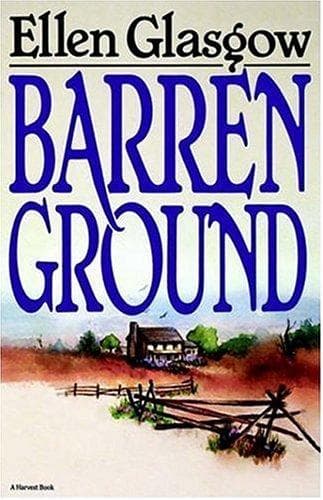
Country life -- Fiction; Pastoral fiction; Piedmont (U.S. : Region) -- Fiction; Virginia -- Fiction
Turning back into the empty hall, she was surprised to find that she had
begun to miss Nathan. It was the first time since her marriage that he
had spent a whole day away from the farm, and she realized that she
should be glad to have him in the house again. The discovery was so
unexpected that it startled her into gravity, and passing the kitchen,
where she saw Fluvanna poking wood into the open door of the stove, she
walked slowly into her room and stood looking about her as if a fresh
light had fallen across her surroundings. Yes, incredible as it was, she
really missed Nathan! Though she had never loved him, after nine years
of marriage she still liked him with a strong and durable liking. It was
a tribute, she realized, to her husband's character that this negative
attachment should have remained superior to the universal law of
diminishing returns. No woman, she told herself, could have lived for
nine years with so good a man as Nathan and not have grown fond of him.
She recognized his disadvantages as clearly as ever; yet recognizing
them made little difference in her affection. She liked him because, in
spite of his unattractiveness, he possessed a moral integrity which she
respected and a magnanimity which she admired. He had accepted her
austerity of demeanour as philosophically as he accepted a bad season;
and to love but to refrain from the demands of love, was the surest way
he could have taken to win her ungrudging esteem.
When she went out to remind Nimrod that he must start earlier to meet
the six o'clock train, the snow was light and feathery on the surface,
and the air was growing gradually milder. At sunset the sky was
shattered by a spear of sunshine which pierced the wall of clouds in the
west. Between that golden lance and the solitary roof under which she
stood swept the monotonous fields of snow.
"If it clears, there'll be a good moon to-night," she thought.
When the milking hour came she yielded to the persuasions of John Abner
and did not go out to the barn. "It is time you learned that nobody is
indispensable," he said, half sternly, half jestingly. "There are mighty
few jobs that a full-grown man can't do as well as a woman, and loafing
round a cow-barn in wintertime isn't one of them."
"The negroes get so careless," she urged, "if they aren't watched."
Public-domain text, read in full here on John Shaqi.
Reviews
Reviews
No reviews yet
Be the first to share your thoughts on this work.
Elsewhere in the archive
Join the Discussion
Join the discussion
Sign in to leave a comment or review.
Sign InorCreate an account