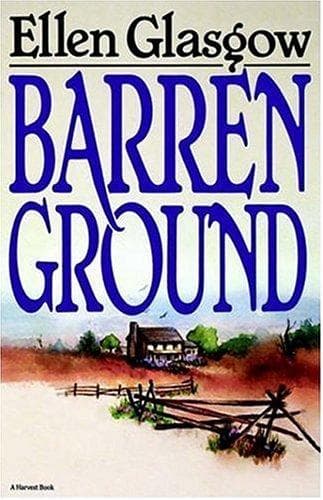
Country life -- Fiction; Pastoral fiction; Piedmont (U.S. : Region) -- Fiction; Virginia -- Fiction
He went out laughing, and she dropped back in her chair to wait until
the hour came for her work in the dairy. John Abner was right, of
course. One of the exasperating things about men, she reflected, was
that they were so often right. It was perfectly true that she could not
stay young for ever, and at forty-two, after twenty years of arduous
toil, she ought to think of the future and take the beginning of the
hill more gradually. Though she was as strong, as vital, as young, in
her arteries at least, as she had ever been, she could not, she
realized, defend herself from the inevitable wearing down of the years.
Her eyes wandered to the mirror in the bureau which had belonged to her
mother, and it seemed to her that, sitting there in the ruddy firelight,
the magic of youth enveloped her again with a springtime freshness. Her
eyes looked so young in the dimness that they bathed her greying hair,
her weatherbeaten skin, and her tall, strong figure, which was becoming
a little dry, a trifle inelastic, in the celestial blueness of a May
morning.
"I wonder if it is because I've missed everything I really wanted that I
cannot grow old?" she asked herself with a start.
It was seven o'clock when she returned from the dairy, and John Abner
was already in the kitchen demanding his supper.
"The train is certain to be hours late," he said. "There's no use
waiting any longer for Father."
"Yes, we might as well have supper. I can cook something for him when he
comes."
"I saw Mr. Garlick going over a few minutes ago. His daughter, Molly,
went down yesterday with young Mrs. Ellgood to a concert. Mrs. Ellgood
has always been crazy about music. Did you ever hear her play on the
violin?"
"No, I never went anywhere even before I was married. I'm glad she's
coming up with your father. He always liked her in spite of the fact
that she despises the country."
When supper was over, and John Abner had eaten with an amazing appetite,
they went back into her bedroom and sat down to wait before the fire.
Though she had never been what Nathan called "an easy talker," she could
always find something to say to her stepson; and they talked now, not
only of the farm, the spring planting, the new tractor-plough they had
ordered, but of books and distant countries and the absurd illustrations
in the Lives of the Missionaries, which John Abner was reading for the
fourth time.
"Alfalfa has been the making of Five Oaks," Dorinda said. "It's a shame
Pa never knew of it."
"I wonder if Doctor Greylock ever comes back to his farm. If he does, he
must be sorry he lost it."
"Well, he ruined the place, he and his father before him. It was no
better than waste land when we bought it."
John Abner bent over to caress the head of the pointer. "I can't blame
anybody for wanting to quit," he said. "There's a lot to be said for
those missionary chaps. They were the real adventurers, I sometimes
think."
Public-domain text, read in full here on John Shaqi.
Reviews
Reviews
No reviews yet
Be the first to share your thoughts on this work.
Elsewhere in the archive
Join the Discussion
Join the discussion
Sign in to leave a comment or review.
Sign InorCreate an account