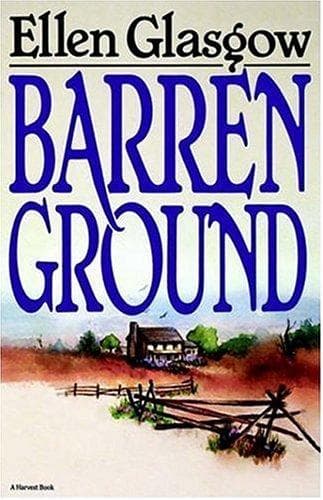
Country life -- Fiction; Pastoral fiction; Piedmont (U.S. : Region) -- Fiction; Virginia -- Fiction
It was five years now since the war had ended, and in those years she
had recovered both her inward confidence and her outward prosperity. The
misfortunes that had threatened the two farms had passed over her like
wild geese. Even the labour question had been lessened, if not solved,
by the application of electricity and gasoline. She had made a name that
was not unknown among the farmers of the state; she had reclaimed two
unproductive farms from the clutch of broomsedge and sassafras. In
shallow soil, where her father had ploughed only six inches deep, she
was now raising rich and abundant crops. Her dairy, she knew, was as
well managed, her butter as good, as any that could be found in the
country. The products of her dairy, with the name Old Farm stamped under
the device of the harp-shaped pine, were bringing the highest prices in
the market. She could smile now, with her butter selling in the
Washington dairy at a dollar a pound, over the timidity with which she
had, modestly asked thirty cents in the beginning. By that subtle
combination of prudence and imprudence which she called character, she
had turned disappointment into contentment and failure into success.
Riding there in the silver gleams which flashed up from the
life-everlasting, she appeared, after the hard years, to have ripened
into the last mellowness of maturity. Though her figure in the
shirtwaist and knickerbockers of brown corduroy was no longer youthful,
it was still shapely. The texture of her skin was rough and hard like
the rind of winter fruit, but the dark red had not faded, and her eyes
beneath the whitened hair were still as blue as a jay bird's wing.
Though she did not look young for her fifty years, she looked as if the
years had been victorious ones.
As she opened the new gate, and passing through, turned to close it
behind her, she heard the sound of approaching wheels, and saw the
piebald horse and peculiar gig of Mr. Kettledrum ascending from the dip
in the road. When he reached her they stopped to speak, after the manner
of the country, and the old "mail rider," who was just returning on his
circuit of twenty-six miles, described, with sprightliness, the
condition of the roads over which he had travelled.
"Three big trees blew down on the Whippernock road the other night," he
said, "and I reckon they'll lie thar until they rot if the farmers down
that way don't cut them up for logs to burn. The Government sent an
inspector down last week and he rode over my circuit along with me." A
note of pride crept into his quavering voice. "He told me he'd never
seen any worse roads in the whole course of his recollection. No, ma'am,
not in the whole course of his recollection."
"I hope he'll do something about them. After all, the Government is
responsible for the rural delivery."
Public-domain text, read in full here on John Shaqi.
Reviews
Reviews
No reviews yet
Be the first to share your thoughts on this work.
Elsewhere in the archive
Join the Discussion
Join the discussion
Sign in to leave a comment or review.
Sign InorCreate an account