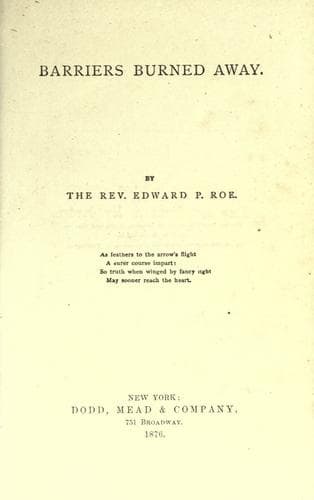
Chicago (Ill.) -- History -- To 1875 -- Fiction; Fires -- Fiction; Great Fire, Chicago, Ill., 1871 -- Fiction; Historical fiction
Her father explained coldly to the astonished audience and the
half-paralyzed tenor (who still stood with his mouth open) that his
daughter was not at all well that evening, and ought not to have
appeared at all. This Mrs. Von Brakhiem took up and repeated with
endless variations. But the evidences of sheer mental distress on the
part of Christine had been too clear, and countless were the whispered
surmises of the fashionable gossips in explanation.
Mrs. Von Brakhiem herself, burning with curiosity, soon retired, that
she might receive from her lovely charge some gushing confidences,
which she expected, as a matter of course, would be poured into what
she chose to regard as her sympathizing ear. But she knocked in vain
at Christine's door.
Later Mr. Ludolph knocked. There was no answer.
"Christine!" he called.
After some delay a broken voice answered, "You cannot enter--I am not
well--I have retired."
He turned on his heel and strode away, and that night drank more brandy
and water than was good for him.
As for Christine, warped and chilled though her nature had been, she
was still a woman, she was still young, and, though she knew it not,
she had heard the voice which had spoken her heart into life. Through
a chain of circumstances for which she was partly to blame, she had
been made to suffer as she had not believed was possible. The terrible
words of Mr. Bruder's letter rang continually in her ears--"Mrs. Fleet
is not dying a natural death; he has been, slain."
For many long, weary days the conviction had been growing upon her
that she had indeed slain him and mortally wounded herself. Until
to-night she had kept herself outwardly under restraint, but now the
long pent-up feeling gave way, and she sobbed as if her heart would
break--sobbed till the power to weep was gone. If now some kind,
judicious friend had shown her that she was not so guilty as she deemed
herself; that, however, frightful the consequences of such acts, she
was really not to blame for what she did not intend and could not
foresee; more than all, if she could only have known that her worst
fears about Dennis were not to be realized, and that he was now
recovering, she might at once have entered on a new and happier life.
But there was no such friend, no such knowledge, and her wounded spirit
was thrown back upon itself.
At last, robed as she had been for the evening, she fell asleep
from sheer exhaustion and grief--for grief induces sleep.
The gems that shone in her dishevelled hair; that rose and fell as at
long intervals her bosom heaved with convulsive sobs, like the fitful
gusts of a storm that is dying away; the costly fabrics she wore--made
sad mockery in their contrast with the pale, tear-stained, suffering
face. The hardest heart might have pitied her--yes, even the wholly
ambitious heart of her father, incensed as he was that a plebeian
stranger of this land should have caused such distress.
Public-domain text, read in full here on John Shaqi.
Reviews
Reviews
No reviews yet
Be the first to share your thoughts on this work.
Elsewhere in the archive
Join the Discussion
Join the discussion
Sign in to leave a comment or review.
Sign InorCreate an account