“Exactly. Although not quite sober, from a mere glance he was able to
detect what you were thinking. Do you wish me to believe, Knox, that
this same man had not foreseen what the police would think when Colonel
Menendez was found shot within a hundred yards of the garden of the
Guest House?”
I was somewhat taken aback, for Harley’s argument was strictly logical,
and:
“It is certainly very puzzling,” I admitted.
“Puzzling!” he exclaimed; “it is maddening. This case is like a Syrian
village-mound. Stratum lies under stratum, and in each we meet with
evidence of more refined activity than in the last. It seems we have yet
to go deeper.”
He took out his pipe and began to fill it.
“Tell me about the interview with Madame de Stämer,” he directed.
I took a seat facing him, and he did not once interrupt me throughout my
account of Inspector Aylesbury’s examination of Madame.
“Good,” he commented, when I had told how the Inspector was dismissed.
“But at least, Knox, he has a working theory, to which he sticks like an
express to the main line, whereas I find myself constantly called upon
to readjust my perspective. Directly I can enjoy freedom of movement,
however, I shall know whether my hypothesis is a house of cards or a
serviceable structure.”
“Your hypothesis?” I said. “Then you really have a theory which is
entirely different from mine?”
“Not entirely different, Knox, merely not so comprehensive. I have
contented myself thus far with a negative theory, if I may so express
it.”
“Negative theory?”
“Exactly. We are dealing, my dear fellow, with a case of bewildering
intricacies. For the moment I have focussed upon one feature only.”
“What is that?”
“Upon proving that Colin Camber did not do the murder.”
“Did _not_ do it?”
“Precisely, Knox. Respecting the person or persons who did do it, I
had preserved a moderately open mind, up to the moment that Inspector
Aylesbury entered the library with the Lee-Enfield.”
“And then?” I said, eagerly.
“Then,” he replied, “I began to think hard. However, since I practise
what I preach, or endeavour to do so, I must not permit myself to
speculate upon this aspect of the matter until I have tested my theory
of Camber’s innocence.”
“In other words,” I said, bitterly, “although you encouraged me to
unfold my ideas regarding Mrs. Camber, you were merely laughing at me
all the time!”
“My dear Knox!” exclaimed Harley, jumping up impulsively, “please don’t
be unjust. Is it like me? On the contrary, Knox”--he looked me squarely
in the eyes--“you have given me a platform on which already I have begun
to erect one corner of a theory of the crime. Without new facts I can go
no further. But this much at least you have done.”
“Thanks, Harley,” I murmured, and indeed I was gratified; “but where do
your other corners rest?”
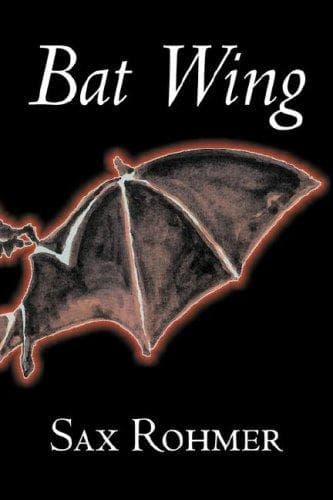
“They rest,” he said, slowly, “they rest, respectively, upon a bat wing,
a yew tree, and a Lee-Enfield charger-loader.”
CHAPTER XXX
THE SEVENTH YEW TREE
Public-domain text, read in full here on John Shaqi.
Reviews
Reviews
No reviews yet
Be the first to share your thoughts on this work.
Elsewhere in the archive
Join the Discussion
Join the discussion
Sign in to leave a comment or review.
Sign InorCreate an account