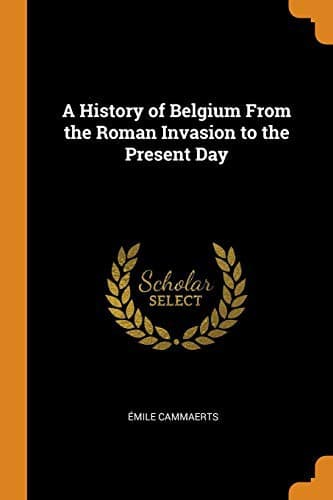
Belgium: From the Roman Invasion to the Present DayCammaerts, Emile
History
Belgium: From the Roman Invasion to the Present Day
Cammaerts, Emile
Belgium -- History
While the internal policy of the Republic was veiled in so much
ideology and marred by tyrannous cupidity, its foreign policy was based
on sound realism. The French plenipotentiaries, like Joseph II, but far
more clearly, perceived that the possession of the key positions on the
Scheldt and on the Meuse was essential to the security of the country
and to its commercial prosperity. A comparison between the clauses of
the treaty of The Hague and of the treaty of Muenster is particularly
enlightening. Apparently, the demands of the French were moderate; in
fact, they entirely reversed the situation created in the seventeenth
century. No wholesale annexations would have given the French
equivalent advantages. The choice of the Republic was dictated by sound
strategic principles and determined by the same motives as had guided
the Dutch in 1648.
But the Belgian people, suffering from all the evils of foreign
occupation, could derive but scant satisfaction from the restoration of
the lost districts. The Convention was waging war on the world and
bleeding Belgium white in order to find the necessary resources. The
provinces were obliged to pay a contribution of 80,000,000 francs,
amounting to six times the previous yearly budget. Hostages were taken
from the towns which could not contribute their share. Requisitions of
all raw material were systematically organized. Cambon boasted to the
Convention that the Netherlands not only provided for the upkeep of the
Republican armies, but also enriched the national treasury. Under the
management of the "Agence de Commerce et d'Extraction de la Belgique,"
the treasuries of churches, convents, corporations and municipalities
were carted away, together with pictures, works of art and industrial
machines. The Republican agents, nicknamed the "French sponges," even
went as far as plundering private property. At the same time, the value
of the assignats had fallen to a ridiculously low level, and in order
to check the corresponding rise in prices the authorities had fixed a
"maximum" and obliged the traders to keep their shops open.
Public-domain text, read in full here on John Shaqi.
Reviews
Reviews
No reviews yet
Be the first to share your thoughts on this work.
Elsewhere in the archive
Join the Discussion
Join the discussion
Sign in to leave a comment or review.
Sign InorCreate an account