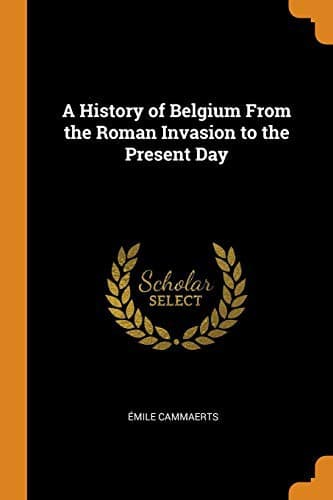
Belgium: From the Roman Invasion to the Present DayCammaerts, Emile
History
Belgium: From the Roman Invasion to the Present Day
Cammaerts, Emile
Belgium -- History
During the first part of the century the conflict was not so acute,
both parties possessing their moderate and extremist leaders and the
so-called "Liberal Catholics" acting as a link between the two
factions. From 1847 to 1870 the Liberals, representing the bourgeoisie
of the large towns, were most of the time in power, while from 1870 to
1878 the Catholics, upheld by the farmers and the middle classes of the
small towns, took the direction of affairs. The property qualification
was progressively reduced, first for the parliamentary, later for the
provincial and communal elections, and a larger share was given to the
lower middle classes in the administration of the country. Meanwhile,
party differences had developed through the gradual disappearance of
the moderating elements on both sides, and the vexed question of
education was coming to the fore. The 1830 Constitution was not very
explicit concerning this matter, and both parties interpreted it
according to their own interests. Many communes having neglected to
keep up the official schools, religious orders had taken a more and
more important part in primary education. When the Liberals came into
power, in 1878, they passed a law compelling every commune to maintain
its own schools, where religious instruction should only be given out
of school hours. They also founded a great many secondary schools and
training colleges, with the object of transferring education from
religious to secular teachers. These sweeping reforms entailed heavy
expenditure and unpopular taxation, and finally brought about the
downfall of the Liberal regime in 1884. The Catholics proceeded to
abrogate the 1879 law on primary education by giving State grants to
the free Catholic schools, and suppressed a number of the secondary
schools and training colleges established by the previous regime.
Feeling ran so high that King Leopold, who realized the harm which this
"school war" was doing to the national spirit, warned Monsieur Malou
(the Catholic premier) against the attitude he had adopted, as he had
previously warned the Liberal premier, Frere-Orban: "The Liberals have
acted as if there were no longer any Catholics in Belgium. Are you
going also to act as if there were no Liberals left in the country,
without any consideration for the disastrous consequences of such an
attitude for the nation and for yourself?"
Public-domain text, read in full here on John Shaqi.
Reviews
Reviews
No reviews yet
Be the first to share your thoughts on this work.
Elsewhere in the archive
Join the Discussion
Join the discussion
Sign in to leave a comment or review.
Sign InorCreate an account