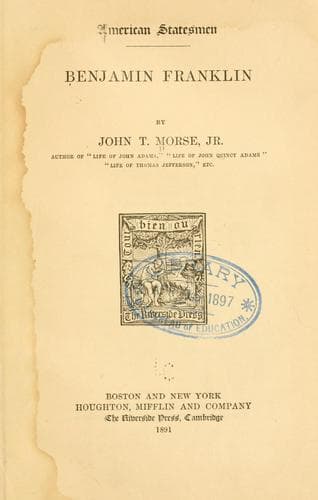
Benjamin FranklinMorse, John T., Jr. (John Torrey)
History
Benjamin Franklin
Morse, John T., Jr. (John Torrey)
Franklin, Benjamin, 1706-1790
well of Vergennes' motives, 373;
criticises Jay's letter on this point, 374;
differs with Jay regarding French duplicity, 375, 378;
resumes negotiations with Oswald, 377;
surrenders his view to Jay and Adams, probably to save time, 379;
on compensation to Tories, 381;
suggests counter-claims, 382;
antipathy to loyalists, 382;
informs Vergennes of treaty, 384;
criticised by him, 385;
apparent duplicity, 386;
tries to defend his action, 387;
blamed at home for too great subservience to France, 388;
persuades Jay not to write a defense, 388;
asks Jay and Adams to vindicate him, 389;
increased ill-feeling with Adams, 391;
merits of the dispute, 391;
large part played by him in negotiations, 392;
value of his reputation, 392, 393;
his friendly opinion of Vergennes, 393, 394, and of France, 395;
again resigns, 396;
retained for commercial treaties, 397;
pleasant life in Paris, 397, 398;
departure from France, 400, 401;
voyage, 401, 402.
_President of Pennsylvania._ Arrival at Philadelphia, popular welcome, 403;
elected President of State Council, 403;
acts as peacemaker between factions, 404;
successive reelections, 404;
devotes salary to public use, 404;
humorous proposal for paying British debts, 405;
not discouraged by condition of America, 406;
preaches coolness, 407;
elected member of Constitutional Convention, 407.
_In Constitutional Convention._
Elected in order to preside in possible absence of Washington, 407;
opposes centralization, 408;
views on constitutional points, 408-411;
moves that sessions open with prayer, 409;
urges harmony, 411;
favors Washington for president, 412;
leaves public life, 412;
physical infirmities, 412;
cheerfulness of mind in later days, 413, 414;
applauds French Revolution, 415;
president of abolition society, 415;
condemns too great license of press, 416;
death, 417;
public honors in America, 417;
but continued neglect on part of Congress
to adjust his accounts or recompense Temple Franklin, 417, 418;
memorial ceremonies in France, 419.
_Character._ General summary 420-427;
an unfavorable view, 337, 338;
criticisms on the foregoing, 338-344;
religious views, 5, 9, 24-29;
moral attitude, 21, 24, 29-33;
utilitarianism, 29-30; 422-424;
wit and humor, 11, 120, 134, 207, 212, 268, 405, 426;
humanity, 101, 112, 144, 254-264, 393, 425;
patriotism, 203, 424;
courage and cheerfulness, 145, 172, 268, 406;
business ability, 12, 13, 39;
literary ability, 22, 35, 43, 426;
diplomatic ability, 338-344;
tact, 52, 112, 113, 243, 244, 365;
political insight, 121-126;
other characteristics, 19, 20, 21, 33, 36, 171, 172, 218;
reputation in Europe, 75, 111, 144, 235, 398, 401, 419.
_Political Opinions._ On colonial union, 44, 208;
on parliamentary supremacy, 46, 47, 196;
on colonial representation in Parliament, 49, 128;
on relation of colonies to England, 66, 124-126;
Public-domain text, read in full here on John Shaqi.
Reviews
Reviews
No reviews yet
Be the first to share your thoughts on this work.
Elsewhere in the archive
Join the Discussion
Join the discussion
Sign in to leave a comment or review.
Sign InorCreate an account