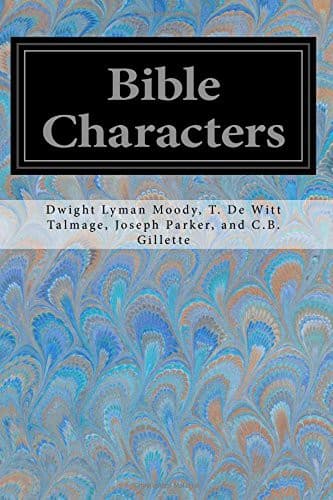
Bible CharactersTalmage, T. De Witt (Thomas De Witt)
Religion
Bible Characters
Talmage, T. De Witt (Thomas De Witt)
Bible -- Biography
There is no monotony in God. One star differeth from another in glory;
no two blades of grass are microscopically identical. There is a common
likeness in the worlds and in the sub-economies of Nature, but the more
penetrating our vision is made by mechanical and scientific aids the more
wondrous in difference are discovered to be the very things which are
supposed to be identical.
We must never allow the apostolic succession to be handed about without
its being accompanied by the apostolic spirit. Every man is in the
apostolic succession who believes in the apostles, who follows them as
they followed Christ, and who would know nothing among men but Jesus
Christ and Him crucified.
“And they burn unto the Lord every morning and every evening burnt
sacrifices and sweet incense; the shew-bread also set they in order upon
the pure table; and the candlestick of gold with the lamps thereof, to
burn every evening.”
At that time piety was mechanical. It could not be otherwise. God never
forces history. The days come, each with its own burden and its own
blessing, its own dawn and its own apocalypse. We can not have today what
is due tomorrow. God’s seasons move in measured revolution, and come
to us in orderly and timely procession; and no man can hasten them by
lighting his camp fire, or striking his matches, or kindling his little
inflammable powder.
We can not imitate the Sun.
Some have tried to mimic the stars; but where is the image of the Sun
that the Sun has not obliterated by one mid-day look?
The time came when all these ordinances were set aside. There was to
be no more burning; there was to be no morning sacrifice and evening
sacrifice and sweet incense, or shew-bread and candlestick of gold and
lamps thereof for evening burning.
“Ye are not come unto the mount that might be touched, and that burned
with fire, nor unto blackness, and darkness, and tempest, and the sound
of a trumpet, and the voice of words; which voice they that heard
intreated that the word should not be spoken to them any more; but ye are
come unto Mount Sion, and unto the city of the living God, the heavenly
Jerusalem, and to an innumerable company of angels, to the general
assembly and church of the first-born, which are written in Heaven, and
to God the Judge of all, and to the spirits of just men made perfect,
and to Jesus the Mediator of the new covenant, and to the blood of
sprinkling, that speaketh better things than that of Abel.”
Public-domain text, read in full here on John Shaqi.
Reviews
Reviews
No reviews yet
Be the first to share your thoughts on this work.
Elsewhere in the archive
Join the Discussion
Join the discussion
Sign in to leave a comment or review.
Sign InorCreate an account