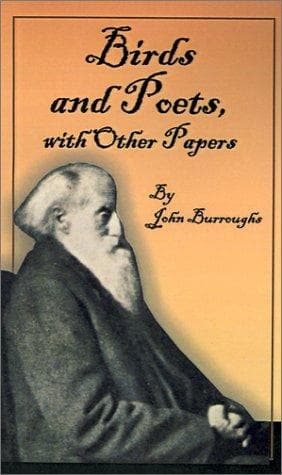
Birds and Poets : with Other PapersBurroughs, John
History
Birds and Poets : with Other Papers
Burroughs, John
American essays -- 19th century; Birds; Natural history -- Outdoor books; Nature
Emerson is the knight-errant of the moral sentiment. He leads, in
our time and country, one illustrious division, at least, in the holy
crusade of the affections and the intuitions against the usurpations of
tradition and theological dogma. He marks the flower, the culmination,
under American conditions and in the finer air of the New World, of the
reaction begun by the German philosophers, and passed along by later
French and English thinkers, of man against circumstance, of
spirit against form, of the present against the past. What splendid
affirmation, what inspiring audacity, what glorious egoism, what
generous brag, what sacred impiety! There is an _eclat_ about his words,
and a brave challenging of immense odds, that is like an army with
banners. It stirs the blood like a bugle-call: beauty, bravery, and a
sacred cause,--the three things that win with us always. The first essay
is a forlorn hope. See what the chances are: "The world exists for the
education of each man.... He should see that he can live all history in
his own person. He must sit solidly at home, and not suffer himself to
be bullied by kings or empires, but know that he is greater than all
the geography and all the government of the world; he must transfer the
point of view from which history is commonly read from Rome and Athens
and London to himself, and not deny his conviction that he is the court,
and, if England or Egypt have anything to say to him, he will try the
case; if not, let them forever be silent." In every essay that follows,
there are the same great odds and the same electric call to the youth
to face them. It is, indeed, as much a world of fable and romance that
Emerson introduces us to as we get in Homer or Herodotus. It is true,
all true,--true as Arthur and his knights, or Pilgrim's Progress, and I
pity the man who has not tasted its intoxication, or who can see nothing
in it.
The intuitions are the bright band, without armor or shield, that
slay the mailed and bucklered giants of the understanding. Government,
institutions, religions, fall before the glance of the hero's eye. Art
and literature, Shakespeare, Angelo, Aeschylus, are humble suppliants
before you, the king. The commonest fact is idealized, and the whole
relation of man to the universe is thrown into a kind of gigantic
perspective. It is not much to say there is exaggeration; the very start
makes Mohammed's attitude toward the mountain tame. The mountain _shall_
come to Mohammed, and, in the eyes of all born readers of Emerson, the
mountain does come, and comes with alacrity.
Public-domain text, read in full here on John Shaqi.
Reviews
Reviews
No reviews yet
Be the first to share your thoughts on this work.
Elsewhere in the archive
Join the Discussion
Join the discussion
Sign in to leave a comment or review.
Sign InorCreate an account