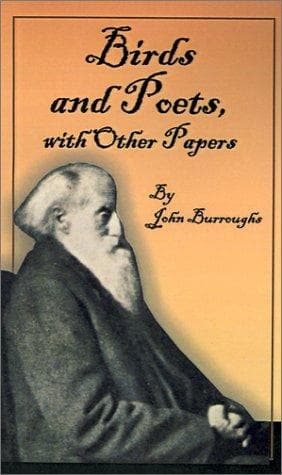
Birds and Poets : with Other PapersBurroughs, John
History
Birds and Poets : with Other Papers
Burroughs, John
American essays -- 19th century; Birds; Natural history -- Outdoor books; Nature
Then is there anything like a perfect April morning? One hardly knows
what the sentiment of it is, but it is something very delicious. It is
youth and hope. It is a new earth and a new sky. How the air transmits
sounds, and what an awakening, prophetic character all sounds have! The
distant barking of a dog, or the lowing of a cow, or the crowing of
a cock, seems from out the heart of Nature, and to be a call to come
forth. The great sun appears to have been reburnished, and there is
something in his first glance above the eastern hills, and the way his
eye-beams dart right and left and smite the rugged mountains into gold,
that quickens the pulse and inspires the heart.
Across the fields in the early morning I hear some of the rare April
birds,--the chewink and the brown thrasher. The robin, the bluebird, the
song sparrow, the phoebe-bird, come in March; but these two ground-birds
are seldom heard till toward the last of April. The ground-birds are all
tree-singers or air-singers; they must have an elevated stage to speak
from. Our long-tailed thrush, or thrasher, like its congeners the
catbird and the mockingbird, delights in a high branch of some solitary
tree, whence it will pour out its rich and intricate warble for an hour
together. This bird is the great American chipper. There is no other
bird that I know of that can chip with such emphasis and military
decision as this yellow-eyed songster. It is like the click of a giant
gunlock. Why is the thrasher so stealthy? It always seems to be going
about on tiptoe. I never knew it to steal anything, and yet it skulks
and hides like a fugitive from justice. One never sees it flying aloft
in the air and traversing the world openly, like most birds, but
it darts along fences and through bushes as if pursued by a guilty
conscience. Only when the musical fit is upon it does it come up into
full view, and invite the world to hear and behold.
The chewink is a shy bird also, but not stealthy. It is very
inquisitive, and sets up a great scratching among the leaves, apparently
to attract your attention. The male is perhaps the most conspicuously
marked of all the ground-birds except the bobolink, being black above,
bay on the sides, and white beneath. The bay is in compliment to the
leaves he is forever scratching among,--they have rustled against his
breast and sides so long that these parts have taken their color; but
whence come the white and the black? The bird seems to be aware that his
color betrays him, for there are few birds in the woods so careful about
keeping themselves screened from view. When in song, its favorite perch
is the top of some high bush near to cover. On being disturbed at such
times, it pitches down into the brush and is instantly lost to view.
Public-domain text, read in full here on John Shaqi.
Reviews
Reviews
No reviews yet
Be the first to share your thoughts on this work.
Join the Discussion
Join the discussion
Sign in to leave a comment or review.
Sign InorCreate an account