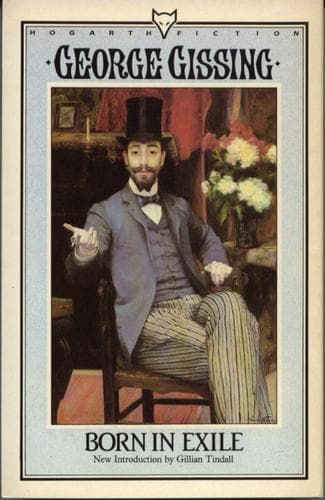
England -- Social life and customs -- 19th century -- Fiction; English fiction -- 19th century
Occasionally--as to-night, under the full moon--he was able to cast off
every form of trouble, and rejoice in his seeming liberty. Though every
step in the life before him was an uncertainty, an appeal to fortune,
his faith in himself grasped strongly at assurance of success. Once
more he felt himself a young man, with unwearied energies; he had
shaken off the burden of those ten frustrate years, and kept only their
harvest of experience. Old in one sense, in another youthful, he had
vast advantages over such men as would henceforth be his
competitors--the complex brain, the fiery heart, passion to desire, and
skill in attempting. If with such endowment he could not win the prize
which most men claim as a mere matter of course, a wife of social
instincts correspondent with his own, he must indeed be luckless. But
he was not doomed to defeat! Foretaste of triumph urged the current of
his blood and inflamed him with exquisite ardour. He sang aloud in the
still lanes the hymns of youth and of love; and, when weariness brought
him back to his lonely dwelling, he laid his head on the pillow, and
slept in dreamless calm.
As for the details of his advance towards the clerical state, he had
decided to resume his career at the point where it was interrupted by
Andrew Peak. Twice had his education received a check from hostile
circumstances: when domestic poverty compelled him to leave school for
Mr. Moxey's service, and when shame drove him from Whitelaw College. In
reflecting upon his own character and his lot he gave much weight to
these irregularities, no doubt with justice. In both cases he was
turned aside from the way of natural development and opportunity. He
would now complete his academic course by taking the London degree at
which he had long ago aimed; the preliminary examination might without
difficulty be passed this summer, and next year he might write himself
Bachelor of Arts. A return to the studies of boyhood probably accounted
in some measure for the frequent gaiety which he attributed to
improving health and revived hopes. Everything he undertook was easy to
him, and by a pleasant self-deception he made the passing of a school
task his augury of success in greater things.
Public-domain text, read in full here on John Shaqi.
Reviews
Reviews
No reviews yet
Be the first to share your thoughts on this work.
Elsewhere in the archive
Join the Discussion
Join the discussion
Sign in to leave a comment or review.
Sign InorCreate an account