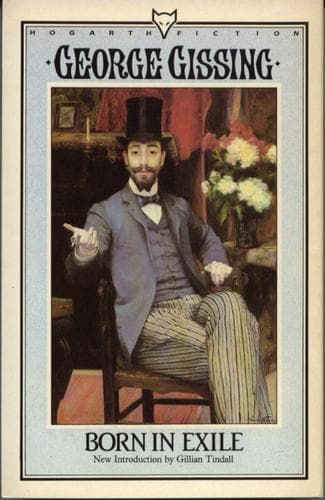
England -- Social life and customs -- 19th century -- Fiction; English fiction -- 19th century
When he was alone again, he of a sudden determined to go to Exeter. He
could no longer endure uncertainty as to the contents of Marcella's
letter. As it was too late for the coach, he set off and walked five
miles to Exmouth, where he caught a train.
The letter lay on his table, and with it one on which he recognised his
mother's handwriting.
Marcella wrote in the simplest way, quite as if their intercourse had
never been disturbed. As she happened to be staying with friends at
Budleigh Salterton, it seemed possible for her to meet him. Might she
hope that he would call at the hotel in Exeter, if she wrote again to
make an appointment?
Well, that needed no reply. But how had she discovered the address? Was
his story known in London? In a paroxysm of fury, he crushed the letter
into a ball and flung it away. The veins of his forehead swelled; he
walked about the room with senseless violence, striking his fist
against furniture and walls. It would have relieved him to sob and cry
like a thwarted child, but only a harsh sound, half-groan,
half-laughter, burst from his throat.
The fit passed, and he was able to open the letter from Twybridge, the
first he had received from his mother for more than a month. He
expected to find nothing of interest, but his attention was soon caught
by a passage, which ran thus:
'Have you heard from some friends of yours, called Ward? Some time ago
a lady called here to ask for your address. She said her name was Mrs.
Ward, and that her husband, who had been abroad for a long time, very
much wished to find you again. Of course I told her where you were to
be found. It was just after I had written, or I should have let you
know about it before.'
Ward? He knew no one of that name. Could it be Marcella who had done
this? It looked more than likely; he believed her capable of strange
proceedings.
In the morning he returned to the seaside. Prospect of pleasure there
was none, but by moving about he made the time pass more quickly.
Wandering in the lanes (which would have delighted him with their
autumnal beauties had his mind been at rest), he came upon Miss
Walworth, busy with a water-colour sketch. Though their acquaintance
was so slight, he stopped for conversation, and the artist's manner
appeared to testify that Marcella had as yet made no unfavourable
report of him. By mentioning that he would return home on the morrow,
he made sure that Marcella would be apprised of this. Perhaps she might
shorten her stay, and his suspense.
Public-domain text, read in full here on John Shaqi.
Reviews
Reviews
No reviews yet
Be the first to share your thoughts on this work.
Elsewhere in the archive
Join the Discussion
Join the discussion
Sign in to leave a comment or review.
Sign InorCreate an account