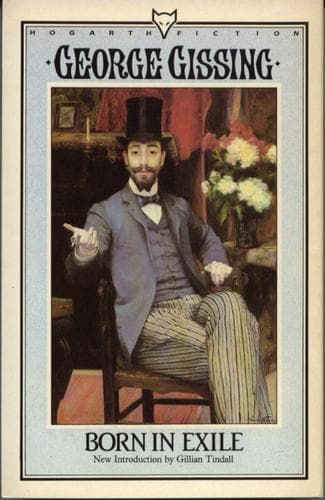
England -- Social life and customs -- 19th century -- Fiction; English fiction -- 19th century
'Is it really Mr. Moxey?' she exclaimed. 'Why, I had all but forgotten
you, and positively it is your own fault! It must be a year or more
since you came to see me. No? Eight months?--But I have been through so
much trouble, you know.' She sighed mechanically. 'I thought of you one
day at Bordighera, when we were looking at some funny little
sea-creatures--the kind of thing you used to know all about. How is
your sister?'
A chill struck upon his heart. Assuredly he had no wish to find
Constance sunk in the semblance of dolour; such hypocrisy would have
pained him. But her sprightliness was a shock. Though months had passed
since Mr. Palmer's decease, a decent gravity would more have become her
condition. He could reply only in broken phrases, and it was a relief
to him when the widow, as if tiring of his awkwardness, turned her
attention elsewhere.
He was at length able to survey the company. Two ladies in mourning he
faintly recognised, the one a sister of Mr. Palmer's, comely but of
dull aspect; the other a niece, whose laugh was too frequent even had
it been more musical, and who talked of athletic sports with a young
man evidently better fitted to excel in that kind of thing than in any
pursuit demanding intelligence. This gentleman Christian had never met.
The two other callers, a grey-headed, military-looking person, and a
lady, possibly his wife, were equally strangers to him.
The drawing-room was much changed in appearance since Christian's last
visit. There was more display, a richer profusion of ornaments not in
the best taste. The old pictures had given place to showily-framed
daubs of the most popular school. On a little table at his elbow, he
remarked the photograph of a jockey who was just then engrossing public
affection. What did all this mean? Formerly, he had attributed every
graceful feature of the room to Constance's choice. He had imagined
that to her Mr. Palmer was indebted for guidance on points of aesthetic
propriety. Could it be that----?
He caught a glance which she cast in his direction, and instantly
forgot the troublesome problem. How dull of him to misunderstand her!
Her sportiveness had a double significance. It was the expression of a
hope which would not be subdued, and at the same time a means of
disguising the tender interest with which she regarded _him_. If she
had been blithe before his appearance, how could she suddenly change
her demeanour as soon as he entered? It would have challenged suspicion
and remark. For the same reason she affected to have all but forgotten
him. Of course! how could he have failed to see that? 'I thought of you
one day at Bordighera'--was not that the best possible way of making
known to him that he had never been out of her mind?
Sweet, noble, long-suffering Constance!
He took a place by her sister, and began to talk of he knew not what,
for all his attention was given to the sound of Constance's voice.
Public-domain text, read in full here on John Shaqi.
Reviews
Reviews
No reviews yet
Be the first to share your thoughts on this work.
Elsewhere in the archive
Join the Discussion
Join the discussion
Sign in to leave a comment or review.
Sign InorCreate an account