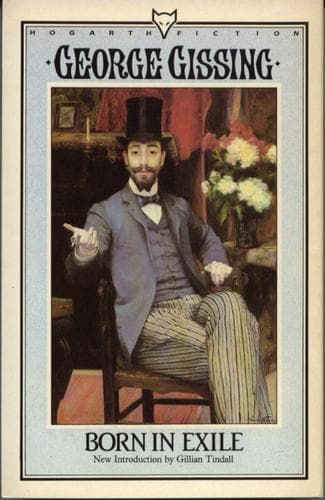
England -- Social life and customs -- 19th century -- Fiction; English fiction -- 19th century
'And I to you,' thought Godwin; a resolve which enabled him to rise
with something like a conventional smile, and thus put an end to a very
brief and quite unsatisfactory interview.
He strode homewards in a state of feverish excitement. His own
behaviour had been wretchedly clownish; he was only too well aware of
that. He ought to have put aside all the grosser aspects of his case,
and have exhibited the purely intellectual motives which made such a
change as he purposed seem desirable to him. That would have been to
act with dignity; that would have been the very best form of gratitude
for the kindness he had received. But no, his accursed lack of
self-possession had ruined all. 'The woman was now offended in good
earnest; he saw it in her face at parting. The fault was admittedly on
his side, but what right had she to talk about 'something
advantageous'? She would write to him, to be sure; that meant, she
could not yet make up her mind whether to grant the money or not. Pluto
take the money! Long before sitting down to her glossy note-paper she
should have received a letter from _him_.
Composed already. Now he was up in the garret bedroom, scribbling as
fast as pen could fly over paper. He had been guilty of a mistake--so
ran the epistle; having decided to leave Whitelaw, he ought never to
have requested a continuance of the pension. He begged Lady Whitelaw
would forgive this thoughtless impropriety; she had made him understand
the full extent of his error. Of course he could not accept anything
more from her. As for the past, it would be idle for him to attempt an
expression of his indebtedness. But for Sir Job's munificence, he must
now have been struggling to complete a radically imperfect
education,--'instead of going into the world to make a place for myself
among the scientific investigators of our time'.
One's claims to respectful treatment must be put forward unmistakably,
especially in dealing with such people as Lady Whitelaw. Now, perhaps,
she would understand what his reserve concealed. The satisfaction of
declining further assistance was enormous. He read his letter several
times aloud. This was the great style; he could imagine this incident
forming a landmark in the biography of a notable man. Now for a fair
copy, and in a hand, mind you, that gave no hint of his care for
caligraphic seemliness: bold, forthright.
The letter in his pocket, he went downstairs. His mother had been out
all the morning; now she was just returned, and Godwin saw trouble on
her forehead. Anxiously she inquired concerning the result of his
interview.
Now that it was necessary to make an intelligible report of what had
happened, Godwin found his tongue falter. How could he convey to
another the intangible sense of wounded dignity which had impelled his
pen? Instead of producing the letter with a flourish, he answered with
affected carelessness:
'I am to hear in a day or two.'
'Did she seem to take it--in the right way?'
Public-domain text, read in full here on John Shaqi.
Reviews
Reviews
No reviews yet
Be the first to share your thoughts on this work.
Join the Discussion
Join the discussion
Sign in to leave a comment or review.
Sign InorCreate an account