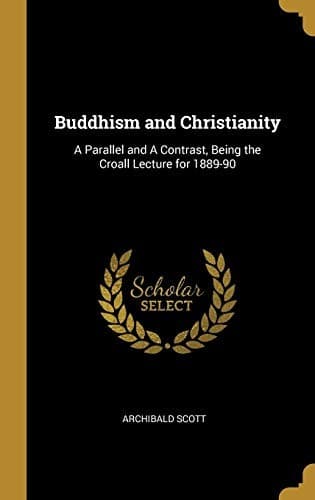
Buddhism and Christianity: A Parallel and a ContrastScott, Archibald
Religion
Buddhism and Christianity: A Parallel and a Contrast
Scott, Archibald
Buddhism -- Relations -- Christianity; Christianity and other religions -- Buddhism
also summoned the brethren, was the monk of the longest standing among
them. So far it seemed to anticipate our principle of Presbyterian
parity, but, like Convocation, it was an exclusively ecclesiastical
gathering, for neither nun, nor novice, nor layman was allowed to be
present. Like our presbyteries when applying their privy censures, they
expected to be “alone.” Then, when all were reverentially placed, in
presence of no heart-searching God, but before one another, there was
recited by the president the order of confessional, according to the
rule that if there was no transgression there was no interruption, and
silence indicated innocence.
First came the recitation of the gravest offences: the four Pârâgikâ
renounced upon their admission, commission of any one of which involved
expulsion from the Order. Then came the list of the less serious
transgressions—Samghâdisesas, involving temporary degradation, and
lastly that of the Pâkittya, or venial faults, which were atoned for by
simple confession. It was a lengthy, minute, ill-arranged form of
inquisition, more comprehensive and rigid than any catechism of the
confessional which Romanism ever devised.[295] It out-phariseed the
Pharisees in its trivialities and repetitions and straining out of
gnats, and no manual of the cloister ever discovered, could equal its
disgusting details of every conceivable form of unnatural vice supposed
to be perpetrable by the brethren.[296] It reads more like a suggestion
to sin than a defence against temptation. We can understand from it
alone, how impossible it was for Buddhism to live up to its true
principles, how incapable it was of urging on the steady moral progress
of the race, and of even realising the example of its founder. Life’s
whole strength was wasted in watching against petty and artificial
transgressions, so that none was available for the prosecution of real
duty. Yet if deliverance was to come by the law, the most trivial
details of action had to be tried; but here, as elsewhere, by the law
was only the knowledge of sin, and that not as an offence against an
infinitely Holy One, but only as a misfortune, or at worst an
imprudence, a stumbling-block placed by man himself in the way of
advancing his interest.
Public-domain text, read in full here on John Shaqi.
Reviews
Reviews
No reviews yet
Be the first to share your thoughts on this work.
Elsewhere in the archive
Join the Discussion
Join the discussion
Sign in to leave a comment or review.
Sign InorCreate an account