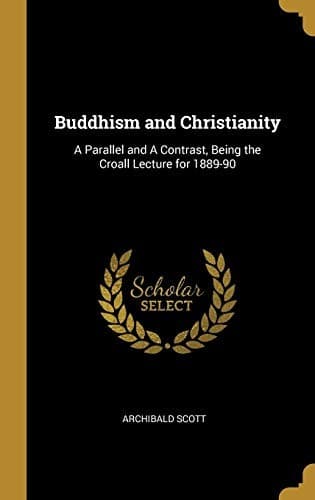
Buddhism and Christianity: A Parallel and a ContrastScott, Archibald
Religion
Buddhism and Christianity: A Parallel and a Contrast
Scott, Archibald
Buddhism -- Relations -- Christianity; Christianity and other religions -- Buddhism
In the poverty and struggles they have
higher hopes, but when difficulties are surmounted, and they dwell at
ease, they mistake or forget their vocation. The adversity and terrible
persecution of the Church, coincident with its primitive enthusiasm, did
a very great deal to preserve its health and purity; and it was simply
natural, and to be expected, that when it emerged into prosperity and
popular favour, like Jeshurun in his fatness, it should have rebelled,
and instead of serving as it was ordained to do, should have usurped the
power to rule.
The iconography of early Christianity reflects even more clearly than
its literature the various stages of its deterioration. As long as the
world was against it, and it was compelled to use such places as the
Catacombs for its shelter and worship, its faith was pure, and its life
was full of exhilaration and brightness. Its symbolism was thoroughly
ideal and spiritual, in sharp and instructive contrast with every Pagan
specimen that has been discovered, and with its own subsequently
paganised art. It was a symbolism, moreover, only of its hopes, and not
of its one object of faith or of worship. It tolerated no symbol in
worship save the water of Baptism and the bread and the wine of the
Eucharist. It needed, as yet, no crucifix, not even a cross,[383] and it
would not allow any image to reveal to the imagination the present but
invisible Christ, or to suggest the profound meaning of His atonement.
But when it went forth, the admired of the world, into the sunshine, and
began to rear the grand basilicas, and people them with the tombs of the
martyrs and the enshrined relics of the saints, the very desire to rise
led it to fight heathenism with its own weapons, and to copy its
splendours.[384] Even before this it was falling back from the simple
service of the synagogue to that of the destroyed temple, but now it was
found adopting the heathen festivals, or accommodating its own to their
dates, and incorporating with its own the more imposing rites of still
popular heathen fanes. To “offer the new law’s new oblation” it invented
a new ritual and priesthood; and seeing a priesthood must have somewhat
to offer, it discovered a new sacrifice in the very sacrament which was
the Divine pledge and human thanksgiving for the abrogation of all
external sacrifice.[385] Then the government of the Empire became the
model of its organisation, and soon it was crowned in a Papacy
professing to dominate, as vicegerent for Christ, a world which
confessedly it has not yet been able to convert.
Public-domain text, read in full here on John Shaqi.
Reviews
Reviews
No reviews yet
Be the first to share your thoughts on this work.
Elsewhere in the archive
Join the Discussion
Join the discussion
Sign in to leave a comment or review.
Sign InorCreate an account