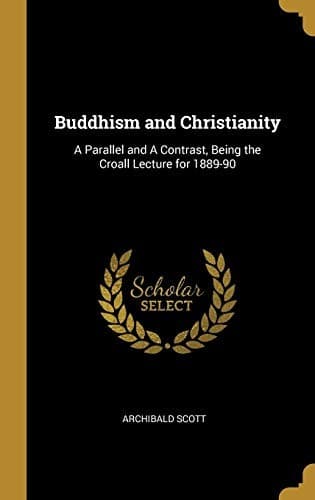
Buddhism and Christianity: A Parallel and a ContrastScott, Archibald
Religion
Buddhism and Christianity: A Parallel and a Contrast
Scott, Archibald
Buddhism -- Relations -- Christianity; Christianity and other religions -- Buddhism
Mysticism, as was natural in a religion quickening both thought and
emotion, appeared early in Christianity, and from the days of St. John
it has never lacked a representative. In its manifold varieties and
aberrations it presents many similarities to the mysticism of the East,
but in reality it is as different from it in its nature as it is distant
from it in its source. Eastern mysticism has always been more
speculative than practical in character. Pantheistic in its origin, it
assumes that all things are as divine as it is their nature to be, and
aspires to get at the unity of being. Western mysticism, on the other
hand, starts always from a sense of the disorder and alienation of
things, and endeavours to get at man’s true life. The Eastern finds its
object within, the Western generally without; the Eastern considers
identity with Deity a natural state, the Western regards perfect
fellowship with Deity as a goal of spiritual attainment. In Christianity
mysticism has been occasional in its manifestations, and has always been
regarded as an innovation; but in the East it is the normal deduction
from Hindu Pantheism and Buddhist Nihilism.[391] Nâgârdjuna and
Bôdiharma were the natural outcome of Gotama’s teaching. In Christianity
it has often shown itself to be marvellously practical, and generally in
revolt from some stereotyped system of dogma or form of worship. Though
associated in our thoughts more with the sentimental than the
intellectual aspects of religion,[392] it has manifested frequently a
decidedly rationalistic tendency. Refusing to be dominated by authority
or to be bound by antiquity, it has questioned fearlessly the dicta of
Scripture, avowing that reason is not superseded, but divinely inspired
and controlled as the organ of revelation. In Christianity its
extravagances may be forgiven in consideration of the benefits which
have flowed from it. It powerfully helped to bring about the
Reformation, and since then, in the Churches, whether reformed or
unreformed, it has tended to sweeten and intensify devotion. It has kept
them mindful of their common lineage by insisting upon those essential
and universal truths which are confessed to be vital in all religions,
and especially by proclaiming the supremacy of the Holy Spirit as the
fountain of all enlightenment and activity.
Public-domain text, read in full here on John Shaqi.
Reviews
Reviews
No reviews yet
Be the first to share your thoughts on this work.
Elsewhere in the archive
Join the Discussion
Join the discussion
Sign in to leave a comment or review.
Sign InorCreate an account