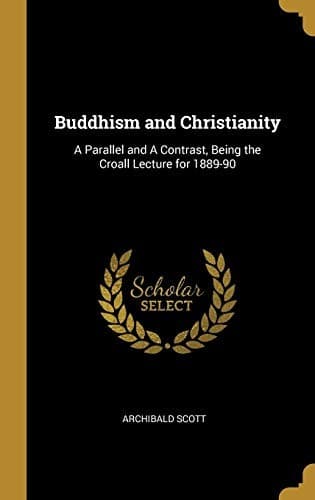
Buddhism and Christianity: A Parallel and a ContrastScott, Archibald
Religion
Buddhism and Christianity: A Parallel and a Contrast
Scott, Archibald
Buddhism -- Relations -- Christianity; Christianity and other religions -- Buddhism
The Pharisees, the Nazarites of the nation as their name implies, the
democratic antagonists of the aristocratic Sadducees, the staunch
opponents of the Gentile, the believers in the coming kingdom of the
just, were deservedly the most popular of all the religious sects in
Palestine. More liberal than the Sadducees in their interpretation of
the law in its bearing upon the people, they never thought of exacting
for faults or transgressions the ancient penalties; but they were far
more severe in their personal observance of it.[122] To the mass of them
it was a ladder by which they might climb into the kingdom of heaven;
and out of it, to make sure of this end, they evolved a most
comprehensive system of bye-laws, as sacred to them as the original
precepts by which every action and word and relation of life was
regulated. Pharisaism was just Brahmanism, and though more ethically
applied it was in its spirit and aim as selfish. Bent only upon
accumulating merit, in character it became eventually as morally impure.
Forgetting in their attention to petty details the weightier obligations
of life, disregarding their neighbours that they might provide for their
own recompence, the Pharisees became as a class so corrupt as to draw
upon them the most scathing of all the denunciations of our Lord.
More Pharisaic than the Pharisees, said to be an offshoot or secession
from them, the Essenes in their desert communities sought by the worship
of Jehovah in the spirit of the prophets, and yet apparently by prayers
to the sun, and by an ascetic and celibate life, to deliver the immortal
soul from material impurity, to educate it to enjoy the beatific vision,
and to prophesy the secret things of the future. In these communities of
pious people, the very flower of Judaism,[123] the only ray of light in
the deepening darkness, some may be pardoned in professing to find the
dawn of Christianity—not in its external arrangements, but its inward
dispositions and beliefs. In its avowal that morality was superior to
legal observance, in its endeavour to prepare the mind by calm to
receive the Divine instruction, in its sabbatic sanctification of all
days of the week, in its estimate of all work as religious, and of every
meal as sacramental, it pre-intimated the teaching of the coming gospel;
but while its arrangements may have suggested the monastic institutions
of Christendom, we can never regard it as the matrix of Christianity.
Its life was just the last flickering ray of Judaism, a bright gleam
irradiating the features of a moribund age, but not that of a new birth
with promise of a mighty future. It was not the rush of a new force into
the battle of the redemption of humanity, but the _sauve qui peut_ of a
rout which it believed to be universal. As pessimist as Brahmanism in
its views of life, though more Buddhist than Brahman in its methods, its
aim was the same—that of rescuing the individual from a world nigh unto
Public-domain text, read in full here on John Shaqi.
Reviews
Reviews
No reviews yet
Be the first to share your thoughts on this work.
Elsewhere in the archive
Join the Discussion
Join the discussion
Sign in to leave a comment or review.
Sign InorCreate an account