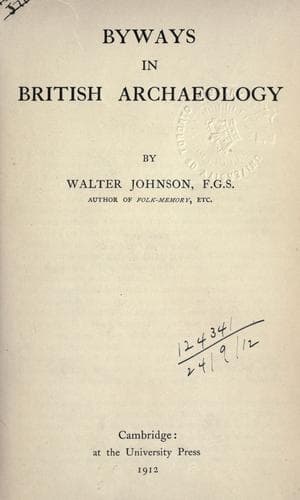
Christian antiquities -- Great Britain; Folklore -- Great Britain; Great Britain -- Antiquities
Professor Tylor’s opinion that the Jews exercised little influence on
the development of the custom among the early Christians, claims great
respect and attention, because of the high authority which he deservedly
possesses. Yet it may be doubted whether he has not under-estimated
Jewish influences, and over-estimated the effects of Jewish contact with
the Persians and other peoples living East of Palestine. In the first
place, one is led to conclude that Professor Tylor’s argument is
somewhat weakened by the stress which is laid upon the differences of
position adopted in prayer, with respect to the sun. The Brahmans, we
are told, pray towards the East, the Thugs towards the West. In the
first case, the symbolism represents hope, the birth of life, the glory
of the rising sun; in the antithesis of the second, the gloom and horror
of death, typified by the departure of the life-giver. These
distinctions, though not trivial in themselves, and even less so in
their later developments, seem to be largely obliterated by the very
existence of adoration performed sunwards. The essence of orientation,
in its early stages, appears, if one may so express it, to consist in
respect paid to the sun. This deference is proved by the East-and-West
axial line, as exemplified in primitive temples and monuments. Where the
altar was at the Western end, the sun’s rays fell on the sacred object
through the Eastern doors at sunrise. As the centuries pass by, we still
find rival opinions as to the proper positions for the altar or other
sacred object. The alinement is agreed upon, but the question arises,
Shall the sanctuary be East or West?
Public-domain text, read in full here on John Shaqi.
Reviews
Reviews
No reviews yet
Be the first to share your thoughts on this work.
Elsewhere in the archive
Join the Discussion
Join the discussion
Sign in to leave a comment or review.
Sign InorCreate an account