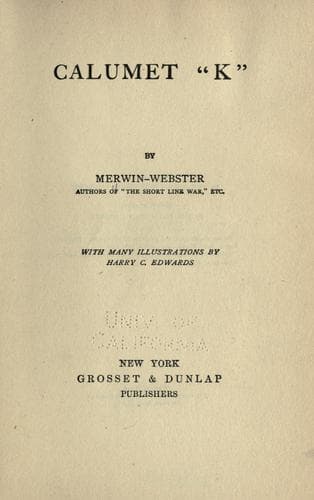
Engineers -- Fiction; Grain elevators -- Design and construction -- Fiction; Psychological fiction
Already millions of bushels had been rushed into Chicago. It was here that
the fight took on its spectacular features, for the grain must be weighed
and inspected before it could be accepted by the Board of Trade, and this
could be done only in "regular" warehouses. The struggle had been to get
control of these warehouses. It was here that the Clique had done their
shrewdest work, and they had supposed that Page was finally outwitted,
until they discovered that he had coolly set about building a
million-bushel annex to his new house, Calumet K. And so it was that the
newspapers learned that on the chance of completing Calumet K before the
thirty-first of December hung the whole question of winning and losing;
that if Bannon should fail, Page would be short two million bushels. And
then came reporters and newspaper illustrators, who hung about the office
and badgered Hilda, or perched on timber piles and sketched until Bannon
or Peterson or Max could get at them and drive them out. Young men with
snap-shot cameras waylaid Bannon on his way to luncheon, and published,
with his picture, elaborate stories of his skill in averting a strike--
stories that were not at all true.
Far out in Minnesota and Montana and South Dakota farmers were driving
their wheat-laden wagons to the hundreds of local receiving houses that
dotted the railroad lines. Box cars were waiting for the red grain, to
roll it away to Minneapolis and Duluth--day and night the long trains were
puffing eastward. Everywhere the order was, "Rush!" Railroad presidents
and managers knew that Page was in a hurry, and they knew what Page's
hurries meant, not only to the thousands of men who depended on him for
their daily bread, but to the many great industries of the Northwest,
whose credit and integrity were inextricably interwoven with his. Division
superintendents knew that Page was in a hurry, and they snapped out orders
and discharged half-competent men and sent quick words along the hot wires
that were translated by despatchers and operators and yard masters into
profane, driving commands. Conductors knew it, brakemen and switchmen knew
it; they made flying switches in defiance of companies' orders, they ran
where they used to walk, they slung their lunch pails on their arms and
ate when and where they could, gazing over their cold tea at some portrait
of Page, or of a member of the Clique, or of Bannon, in the morning's
paper.
Public-domain text, read in full here on John Shaqi.
Reviews
Reviews
No reviews yet
Be the first to share your thoughts on this work.
Elsewhere in the archive
Join the Discussion
Join the discussion
Sign in to leave a comment or review.
Sign InorCreate an account