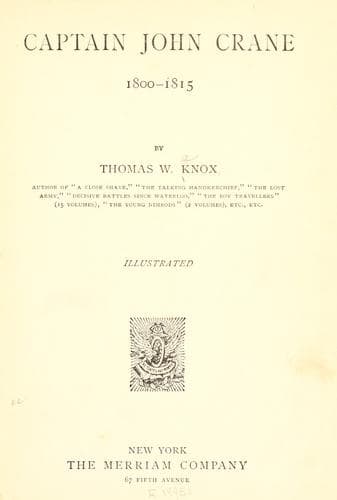
United States -- History -- War of 1812 -- Fiction
Officers and crew were separated in the quarters where we were placed
for the night, partly in order to preserve the distinction between
them, and partly in consequence of the greater security the plan
afforded. The chances of a conspiracy would have been much greater if
officers and men were together, as the former could furnish the brains
for a plot, while the latter could supply the muscle. Sailors have the
courage for executing a scheme which may demand all the aggressive
qualities of human nature, but they have not usually the skill for
devising the scheme itself.
Haines ascertained from one of the guards the location of the Barbican
quarter of Plymouth, and we racked our brains to invent a way for
eluding the vigilance of our keepers, but all to no purpose. We
learned that there had been so many escapes that the officers and men
of the garrison were unusually watchful; the authorities had decreed
that an escape, no matter under what circumstances, would be followed
by severe punishment of those in charge at the time. I heard of a case
in which a prisoner got away by creeping behind his guard, knocking
him down with a stone, and escaping while the soldier lay senseless.
The soldier was so severely wounded that he was sent to the hospital.
When he recovered and came out, he was punished for his negligence in
permitting the prisoner to regain his liberty.
In the quarters where we were placed we found several other prisoners
of our own nationality; and under the circumstances it did not take
long for us to get acquainted. We were kept at Plymouth for two days.
On the afternoon of the second day several new prisoners arrived, and
the guard told us we were to set out early in the morning for Dartmoor
Prison.
CHAPTER XX.
PRISON LIFE AT DARTMOOR.--REMINISCENCES OF
PRIVATEERING.--ACHIEVEMENTS OF THE ROSSIE, HIGHFLIER, GOVERNOR
TOMPKINS, AND OTHERS.--I AM SUMMONED TO THE CAPTAIN'S OFFICE.
Hardly were the birds out of their nests or down from their roosts in
the morning, before we were roused and served with a scanty breakfast
of tea, mush, and bread, with a piece of meat that was anything but
tender or savory. Then we were drawn up in line, the officers I
mean, and offered the choice of giving our paroles not to escape and
marching under a light guard, or being placed under a strong guard and
handcuffed if we declined the paroles.
"I'll take my chances of getting away," said Haines, "and won't give
the beggars any promise."
I had the same impulse; but a brief reflection showed me that in irons
and strongly guarded, there would be practically no chance at all of
escaping. So I decided to give my parole; and before the time was up
for a decision Haines followed my example, as did the other officers.
Public-domain text, read in full here on John Shaqi.
Reviews
Reviews
No reviews yet
Be the first to share your thoughts on this work.
Elsewhere in the archive
Join the Discussion
Join the discussion
Sign in to leave a comment or review.
Sign InorCreate an account