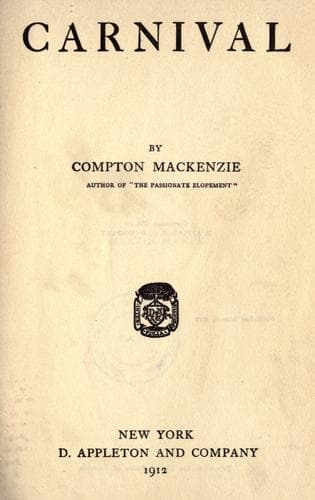
Bildungsromans; Man-woman relationships -- Fiction; Scotland -- Social life and customs -- Fiction
It was a relief to be seated inside the tram and free of Stacpole
Terrace. It was pleasant to change cars at the Nag's Head and behold
again the well-known landscape of Highbury. A pageant of childish
memories, roused by the sight of the broad pavements of Islington, was
marshalled in Jenny's brain. Somehow on the visits she had paid her home
during the last year these aspects were obscured by the consciousness
of no longer owning any right to them. Now, really going home, she
turned into Hagworth Street with a glow of pride at seeing again its
sobriety and dignity so evident after the extravagant stucco and Chinese
balconies of Camden Town's terraces and squares. There was Seventeen,
looking just the same, prophetic of refuge and solid comfort to the
exile. She wondered what freak of folly had ever made her fancy home was
dingy and unpleasant, home that held her bright-eyed mother's laugh, her
absurd father always amusing, and her little sister May. Home was an
enchanted palace with more romance in each dear room than was to be
found elsewhere in the world. Home was alive with the past and preserved
the links which bound together all the detached episodes of Jenny's
life. As she turned into the garden that once had seemed a district, as
she rattled the letter-box--in the days of her estrangement she always
rang the bell--remorse came welling up in tears. She remembered what
good times had been recurrent through the past, tea-parties and
pantomimes and learning to ride a bicycle in the warm sunsets of June.
And in the house opposite nothing was altered, not a fold of the lace
curtains, not a leaf of the dusty aspidistra that took all the light in
the ground-floor window.
What a long time they were opening the door. She rattled the letter-box
again and called out to May. It was like coming home after summer
holidays by the blue sparkling sea, coming home to dolls and toys and
the long, thin garden at the back which from absence had acquired an
exaggerated reputation for entertainment.
Suddenly May opened the door, peeping round over the latch, much scared
apparently.
"How quick you've been," she said.
"Quick?" repeated Jenny.
"Didn't you get my telegram?"
"No," said Jenny, and perceiving that May's eyes were red with weeping,
her delightful anticipation was clouded with dread. "What did you want
to telegraph for? Not--not about mother?"
May nodded.
"She isn't dead?" Jenny gasped.
"No, she isn't dead. But she's had to be took away. You know. To an
asylum."
"Go on," said Jenny. "Oh, what a dreadful thing."
"Well, don't stand there," May commanded. "There's been crowd enough
round here this morning as it is."
In the kitchen she unfolded the story. It seemed that for the last
fortnight their mother had been queer.
"Oh, she was funny," said May. "She used to sit moping over the
fire--never doing nothing and saying all the time how her head hurt."
"Didn't dad fetch in a doctor?" Jenny demanded.
Public-domain text, read in full here on John Shaqi.
Reviews
Reviews
No reviews yet
Be the first to share your thoughts on this work.
Elsewhere in the archive
Join the Discussion
Join the discussion
Sign in to leave a comment or review.
Sign InorCreate an account