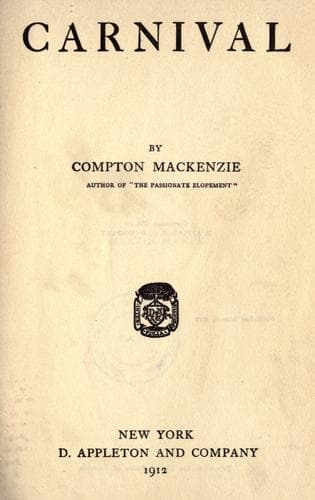
Bildungsromans; Man-woman relationships -- Fiction; Scotland -- Social life and customs -- Fiction
The passion which had once made such sentences seem written with fire
had long been dead. So far as the author was concerned, this old letter
had no power to move with elation or dejection. No vestige even of
fondness or sentiment clung to this memorial of anticipated joy. But why
was it hidden so carefully in her mother's desk, and why was it crumpled
by frequent reading? And how could it have arrived there in the
beginning? It was written in February after Jenny had left home. She
must have dropped it on one of her visits, and her mother finding it
must have thought there was something behind those few gay words. Jenny
tried to remember if she had roused the suspicion of an intrigue by
staying for a week-end with some girl friend. But, of course, she was
away all the time, and often her mother must have thought she was
staying with Maurice. All her scruples, all her care had gone for
nothing. She had wrecked her love to no purpose, for her mother must
have been weighed down by the imagination of her daughter's frailty. She
must have brooded over it, fed her heart with the bitterness of
disappointment and, ever since that final protest which made Jenny leave
home, in gnawing silence. Jenny flung the letter into the fire and sat
down to contemplate the dreadful fact that she had driven her mother
slowly mad. These doctors with their abscess were all wrong. It was
despair of her daughter's behavior which had caused it all. She went
into the kitchen and watched the servant wrestle inadequately with her
work, then wandered back to the parlor and slammed the lid of the trunk
down to shut out the reproach of her mother's possessions. It was
growing late. Soon she must get ready to start for the theater. What a
failure she was! The front door bell rang and Jenny, glad of relief from
her thoughts, went to open it. Trewhella, wringing wet, stepped into the
passage.
"Why, Miss Raeburn," he said, "here's a grand surprise."
"Have you had your tea?" the hostess inquired.
"Ess, had tea an hour ago or more. Dirty weather, 'tis, sure enough."
He had followed her into the parlor as he spoke, and in the gray gloom
he seemed to her gigantic and like rock immovable.
"Finished your business?" she asked, oppressed by the silence which
succeeded his entrance.
"Ess, this right of way is settled for good or bad, according to which
one's happy. And now I've got nothing to do but wait for your answer."
The lamplighter's click and dying footfall left the room in a ghostly
radiance, and the pallid illumination streaming through the lace
curtains threw their reflection on the walls and table in a filigree of
shadows.
"I'll light the gas," said Jenny.
"No, don't; but hark to what I do say. I'm regular burnt up for love of
'ee. My heart is like lead so heavy for the long waiting. Why won't 'ee
marry me, my lovely? 'Tis a proper madness of love and no mistake. Maid
Jenny, what's your answer?"
Public-domain text, read in full here on John Shaqi.
Reviews
Reviews
No reviews yet
Be the first to share your thoughts on this work.
Elsewhere in the archive
Join the Discussion
Join the discussion
Sign in to leave a comment or review.
Sign InorCreate an account