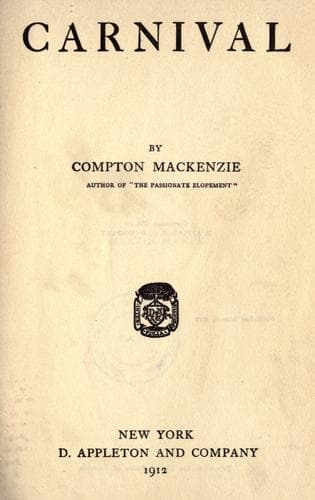
Bildungsromans; Man-woman relationships -- Fiction; Scotland -- Social life and customs -- Fiction
was more apparent in the towans themselves than in the presence of the
birds and beasts haunting their solitude. The sand was veritably alive
in its power to extract from the atmosphere every color and quality.
Sometimes it was golden, sometimes almost snow-white. Near sunset mauve
and rose and salmon-pink trembled in waves upon its surface, and as it
caught fire to welcome day, so it was eager to absorb night. Moonlight
there was dazzling when, in a cold world, it was possible to count the
snail-shells like pearls and watch the sand trickle from rabbit-skulls
like powdered silver.
Perhaps Jenny had never looked so well placed as when, with May beside
her in a drift of sand, she rested against the flat fawns and creams and
distant blues and grays of the background. Years ago when she danced
beneath the plane tree, her scarlet dress by long use had taken on the
soft texture of a pastel. Now she herself was a pastel, indescribably
appropriate to the setting, with her rose-leaf cheeks buried in the high
collar of a lavender-colored frieze coat, with her yellow curls and deep
blue eyes, deeper with the loss of their merriment. Her hands, too, were
very white in the clear sea air. May sitting beside her looked dark as a
pine tree against an April larch. If Jenny was coral, May was ivory.
Here they sat while the sea wind lisped over the sand. Jenny marked the
beauty of the country the more carefully because she disliked so
intensely the country people. Every day the sisters went for long walks,
and when May was tired she would sit on the beach, while Jenny wandered
on by the waves' edge.
November went by with silver skies and silver sunsets, with clouds of
deepest indigo and pallid effulgences of sun streaming through traveling
squalls. Days of swirling rain came in with December, when Jenny would
have to sit in the long room, listening to the hiss of the wind-whipped
elms, watching the geranium petals lie sodden all about the paths, and
the gulls, blown inland, scattered on the hillsides like paper. The
nights were terrible with their hollow moanings and flappings, with the
whistle and pipe of the chimneys, with crashing of unclosed doors, with
rattled lattices and scud and scream and shriek and hum and roar of the
wild December storms. Every morning would break to huge shapes of rain
swept up the valley, one after another until the gales of dawn died away
to a steady drench of water. Then Jenny would sit in the hot room, where
the slab glowed quietly into the mustiness, and idly turn the
damp-stained pages of year-old periodicals, of mildewed calendars, even
of hymn-books. At last she would sally forth desperately, and after a
long battle with wind or gurgling walk through mud and wet, she would
return to a smell of pasties and saffron cake and sometimes the cleaner
pungency of marinated pilchards.
Public-domain text, read in full here on John Shaqi.
Reviews
Reviews
No reviews yet
Be the first to share your thoughts on this work.
Elsewhere in the archive
Join the Discussion
Join the discussion
Sign in to leave a comment or review.
Sign InorCreate an account