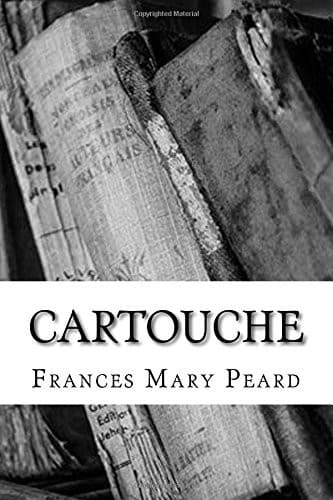
British -- Italy -- Fiction; Dogs -- Fiction; Young women -- Fiction
The letter was not easy to him. When he had written before, they were
engaged to be man and wife, and he remembered, with a pang, the feeling
of dissatisfaction with which he had laid down her little missive from
Bologna. It had seemed to him as if nothing in it went below the
surface, unconscious as he chose to be that it was he who had kept her
there, he who had chilled and disappointed her. Well, he was punished
now, he thought gloomily, and the shy brown eyes seemed to be looking at
him with sad pity. He had lost Phillis, and he had lost Hetherton. He
knew his uncle, with all his foibles, was a just man, and fond of
Phillis, so that he had little doubt that after his solemn assurance
that he alone was to blame, he would provide liberally for Phillis,
though not to the extent of making her his heiress. The estate might
perhaps be reserved for Oliver Trent, if Jack kept silence. Jack was
not sufficiently superior to mortal weaknesses to find that reflection
pleasant. But it would have been easier to endure, or, at any rate, so
he thought at this moment, if he could have shifted the cause of its
doing on any shoulders but his own. He made a wry face as he
acknowledged his own absolute folly. He would thankfully now have
thrown away his old prospects of Hetherton for the hope of winning
Phillis, but it was far from soothing to remember that he had flung both
to the winds. First he had listened too easily, then repented too
hastily, then had found out too late what he might have known from the
very first. It seemed to him as if he could never reproach another man
with folly. And he had a distracting consciousness as he wrote--
stopping every now and then, jumping up to poke the fire or do something
which might by some good chance assist his expressions--that although it
was Phillis, and nobody but Phillis, who had sent him on his errand, she
would believe nothing but that Bice's deliverance had been the actual
spur. It made it, as has been said, difficult for him to write. He did
not like to paint Trent's conduct in too black colours, lest it might
seem it was his object to effect a break between him and Bice. Yet it
was quite clear to him that the break ought to be effected, if only it
could be done by other hands than his, and he grew vexed that he had not
assured himself that Clive would speak out and to the purpose. His
sentences read coldly, because he wished to treat all that part, which
was his only excuse for writing, in a business-like manner. Phillis,
thinking to shield him, and feeling sure it would be broken, had not
told him of the actual tie existing between Bice and Oliver Trent, and
he guarded his words about them both with an evident restraint. It was
a great relief to him when at last his letter was finished and placed in
the letter-bag, and then he half smiled to find that his thoughts had
wandered to a calculation of the number of days that must pass before he
would receive an answer.
Public-domain text, read in full here on John Shaqi.
Reviews
Reviews
No reviews yet
Be the first to share your thoughts on this work.
Elsewhere in the archive
Join the Discussion
Join the discussion
Sign in to leave a comment or review.
Sign InorCreate an account