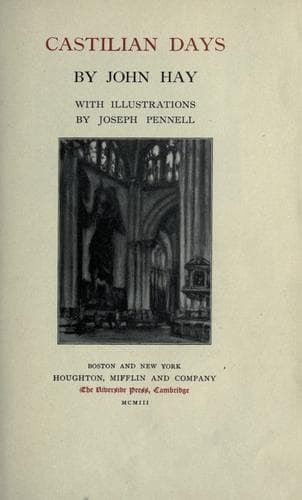
Spain -- Description and travel; Spain -- Social life and customs
As we entered in the evening the play had just begun. The scene was the
interior of the Temple at Jerusalem, rather well done,--two ranges of
superimposed porphyry columns with a good effect of oblique perspective,
which is very common in the Spanish theatres. St. Simeon, in a dress
suspiciously resembling that of the modern bishop, was talking with a
fiery young Hebrew who turns out to be Demas, the Penitent Thief, and
who is destined to play a very noticeable part in the evening's
entertainment. He has received some slight from the government
authorities and does not propose to submit to it. The aged and
cooler-blooded Simeon advises him to do nothing rash. Here at the very
outset is a most characteristic Spanish touch. You are expected to be
interested in Demas, and the only crime which could appeal to the
sympathies of a Castilian crowd would be one committed at the promptings
of injured dignity.
There is a soft, gentle strain of music played pianissimo by the
orchestra, and, surrounded by a chorus of mothers and maidens, the
Virgin Mother enters with the Divine Child in her arms. The Madonna is a
strapping young girl named Gutierrez, a very clever actress; and the
Child has been bought in the neighboring toy-shop, a most palpable and
cynical wax-doll. The doll is handed to Simeon, and the solemn ceremony
of the Presentation is performed to fine and thoughtful music. St.
Joseph has come in sheepishly by the flies with his inseparable staff
crowned with a garland of lilies, which remain miraculously fresh during
thirty years or so, and kneels at the altar, on the side opposite to
Miss Gutierrez.
As the music ceases, Simeon starts as from a trance and predicts in a
few rapid couplets the sufferings and the crucifixion of the child. Mary
falls overwhelmed into the arms of her attendants, and Simeon exclaims,
"Most blessed and most unfortunate among women! thy heart is to be
pierced with Seven Sorrows, and this is the first." Demas rushes in and
announces the massacre of the innocents, concluding with the appropriate
reflection, "Perish the kings! always the murderers of the people." This
sentiment is so much to the taste of the gamins of the paraiso that they
vociferously demand an encore; but the Roman soldiers come in and
commence the pleasing task of prodding the dolls in the arms of the
chorus.
Public-domain text, read in full here on John Shaqi.
Reviews
Reviews
No reviews yet
Be the first to share your thoughts on this work.
Elsewhere in the archive
Join the Discussion
Join the discussion
Sign in to leave a comment or review.
Sign InorCreate an account