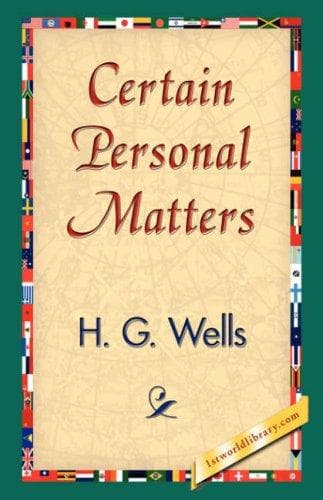
Certain Personal MattersWells, H. G. (Herbert George)
General
Certain Personal Matters
Wells, H. G. (Herbert George)
Wells, H. G. (Herbert George), 1866-1946
Only, happily, as we say, chess is taught the wrong way round. People
put out the board before the learner with all the men in battle array,
sixteen a side, with six different kinds of moves, and the poor wretch
is simply crushed and appalled. A lot of things happen, mostly
disagreeable, and then a mate comes looming up through the haze of
pieces. So he goes away awestricken but unharmed, secretly believing
that all chess-players are humbugs, and that intelligent chess, which is
neither chancy nor rote-learned, is beyond the wit of man. But clearly
this is an unreasonable method of instruction. Before the beginner can
understand the beginning of the game he must surely understand the end;
how can he commence playing until he knows what he is playing for? It is
like starting athletes on a race, and leaving them to find out where the
winning-post is hidden.
Your true teacher of chess, your subtle chess-poisoner, your cunning
Comus who changes men to chess-players, begins quite the other way
round. He will, let us say, give you King, Queen, and Pawn placed out in
careless possible positions. So you master the militant possibilities of
Queen and Pawn without perplexing complications. Then King, Queen, and
Bishop perhaps; King, Queen, and Knight; and so on. It ensures that you
always play a winning game in these happy days of your chess childhood,
and taste the one sweet of chess-playing, the delight of having the
upper hand of a better player. Then to more complicated positions, and
at last back to the formal beginning. You begin to see now to what end
the array is made, and understand why one Gambit differeth from another
in glory and virtue. And the chess mania of your teacher cleaveth to you
thenceforth and for evermore.
It is a curse upon a man. There is no happiness in chess--Mr. St. George
Mivart, who can find happiness in the strangest places, would be at a
loss to demonstrate it upon the chess-board. The mild delight of a
pretty mate is the least unhappy phase of it. But, generally, you find
afterwards that you ought to have mated two moves before, or at the time
that an unforeseen reply takes your Queen. No chess-player sleeps well.
After the painful strategy of the day one fights one's battles over
again. You see with more than daylight clearness that it was the Rook
you should have moved, and not the Knight. No! it is impossible! no
common sinner innocent of chess knows these lower deeps of remorse. Vast
desert boards lie for the chess-player beyond the gates of horn.
Stalwart Rooks ram headlong at one, Knights hop sidelong, one's Pawns
are all tied, and a mate hangs threatening and never descends. And once
chess has been begun in the proper way, it is flesh of your flesh, bone
of your bone; you are sold, and the bargain is sealed, and the evil
spirit hath entered in.
Public-domain text, read in full here on John Shaqi.
Reviews
Reviews
No reviews yet
Be the first to share your thoughts on this work.
Elsewhere in the archive
Join the Discussion
Join the discussion
Sign in to leave a comment or review.
Sign InorCreate an account