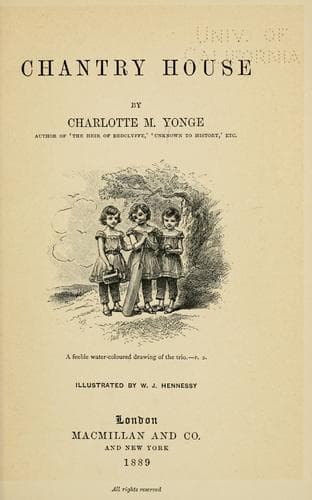
Domestic fiction; England -- Social life and customs -- 19th century -- Fiction; Family -- England -- Fiction
As far as memory serves me, the idea was that wholesome food, regular
habits, and cleanliness were some protection, but one locality might be
as dangerous as another. There had been cases in London all the spring,
but no special anxiety was felt when Clarence returned to his work in the
end of July, much refreshed and invigorated by his holiday, and with the
understanding that he was to have a rise in position and salary on Mr.
Castleford’s return from Ireland, where he was still staying with his
wife’s relations. Clarence was received at the office with a kind of
shamefaced cordiality, as if every one would fain forget the way in which
he had been treated; and he was struck by finding that all the talk was
of the advances of the cholera, chiefly at Rotherhithe. And a great
shock awaited him. He went, as soon as business hours were over, to
thank good old Miss Newton for the comfort and aid she had unwittingly
given him, and to tell her from what she had saved him. Alas! it was the
last benefit she was ever to confer on her old pupil. At the door he was
told by a weeping, terrified maid that she was very ill with cholera, and
that no hope was given. He tried to send up a message, but she was in a
state of collapse and insensible; and when he inquired the next morning,
the gentle spirit had passed away.
He attended her funeral that same evening. Griff said it was a proof how
your timid people will do the most foolhardy things; but Clarence always
held that the good woman had really done more for him than any one in
actually establishing a contact, so to say, between his spirit and
external truth, and he thought no mark of respect beyond her deserts.
She was a heavy loss to him, for no one else in town gave him the sense
of home kindness; and there was much more to depress him, for several of
his Sunday class were dead, and the school had been broken up for the
time, while the heats and the fruits of August contributed to raise the
mortality.
His return had released a couple more clerks for their holiday; it was a
slack time of year, with less business in hand than usual, and the place
looked empty. Mr. Frith worked on as usual, but preserved an ungracious
attitude, as though he were either still incredulous or, if convinced
against his will, resolved that ‘that prig of a Winslow’ should not
presume upon his services. Altogether the poor fellow was quite
unhinged, and wrote such dismal bills of mortality, and meek, resigned
forebodings that my father was almost angry, declaring that he would
frighten himself into the sickness; yet I suppressed a good deal, and
never told them of the last will and testament in which he distributed
his possessions amongst us. Griff said he had a great mind to go and
shake old Bill up and row him well, but he never did.
Public-domain text, read in full here on John Shaqi.
Reviews
Reviews
No reviews yet
Be the first to share your thoughts on this work.
Elsewhere in the archive
Join the Discussion
Join the discussion
Sign in to leave a comment or review.
Sign InorCreate an account