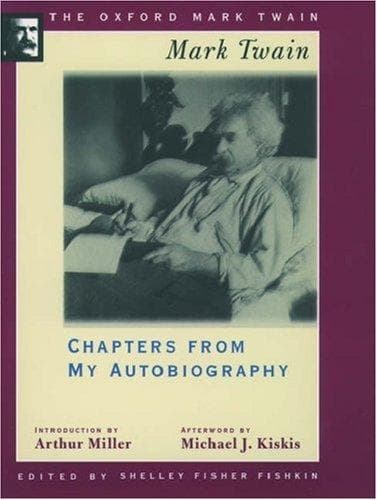
Authors, American -- 19th century -- Biography; Humorists, American -- 19th century -- Biography; Twain, Mark, 1835-1910
[_Dictated April 5, 1906._] There were several candidates for all the
offices in the gift of the new State of Nevada save two--United States
Senator, and Secretary of State. Nye was certain to get a Senatorship,
and Orion was so sure to get the Secretaryship that no one but him was
named for that office. But he was hit with one of his spasms of virtue
on the very day that the Republican party was to make its nominations in
the Convention, and refused to go near the Convention. He was urged, but
all persuasions failed. He said his presence there would be an unfair
and improper influence and that if he was to be nominated the compliment
must come to him as a free and unspotted gift. This attitude would have
settled his case for him without further effort, but he had another
attack of virtue on the same day, that made it absolutely sure. It had
been his habit for a great many years to change his religion with his
shirt, and his ideas about temperance at the same time. He would be a
teetotaler for a while and the champion of the cause; then he would
change to the other side for a time. On nomination day he suddenly
changed from a friendly attitude toward whiskey--which was the popular
attitude--to uncompromising teetotalism, and went absolutely dry. His
friends besought and implored, but all in vain. He could not be
persuaded to cross the threshold of a saloon. The paper next morning
contained the list of chosen nominees. His name was not in it. He had
not received a vote.
His rich income ceased when the State government came into power. He was
without an occupation. Something had to be done. He put up his sign as
attorney-at-law, but he got no clients. It was strange. It was difficult
to account for. I cannot account for it--but if I were going to guess at
a solution I should guess that by the make of him he would examine both
sides of a case so diligently and so conscientiously that when he got
through with his argument neither he nor a jury would know which side he
was on. I think that his client would find out his make in laying his
case before him, and would take warning and withdraw it in time to save
himself from probable disaster.
Public-domain text, read in full here on John Shaqi.
Reviews
Reviews
No reviews yet
Be the first to share your thoughts on this work.
Elsewhere in the archive
Join the Discussion
Join the discussion
Sign in to leave a comment or review.
Sign InorCreate an account