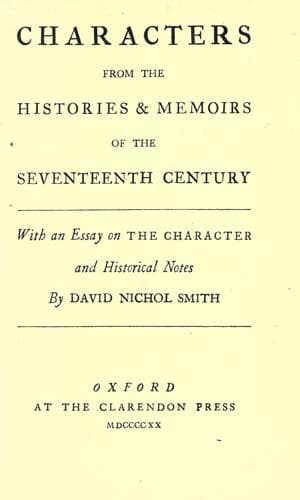
Characters from the Histories & Memoirs of the Seventeenth Century
History
Characters from the Histories & Memoirs of the Seventeenth Century
Great Britain -- Biography; Great Britain -- History -- Stuarts, 1603-1714
He was made L'd Treasurer in the manner, and at the tyme mentioned
before, upon the remoovall of the Earle of Marleborough, and few
moneths before the death of the Duke; the former circumstance, which
is often attended by compassion towards the degraded, and præjudice
toward the promoted, brought him no disadvantage, for besydes the
delight that season had in changes, there was little reverence towards
the person remooved, and the extreme, visible poverty of the Exchequer
sheltered that Provence from the envy it had frequently created,
and opened a doore for much applause to be the portion of a wise and
provident Minister: For the other of the Dukes death, though some who
knew the Dukes passyons and præjudice (which often produced rather
suddayne indisposition, then obstinate resolution) believed he would
have bene shortly cashiered, as so many had lately bene, and so that
the death of his founder, was a greater confirmation of him in the
office, then the delivery of the white staffe had bene, many other
wise men, who knew the Treasurers talent, in remoovinge præjudice and
reconcilinge himselfe to waveringe and doubtfull affections, believed
that the losse of the Duke was very unseasonable, and that the awe or
apprehension of his power and displeasure, was a very necessary allay
for the impetuosity of the new officers nature, which needed some
restrainte and checque for some tyme to his immoderate prætences and
appetite of power. He did indeede appeare on the suddayne wounderfully
elated, and so farr threw off his olde affectation to please some very
much, and to displease none, in which arte he had excelled, that in
few moneths after the Dukes death, he founde himselfe to succeede him
in the publique displeasure, and in the malice of his enimyes, without
succeedinge him in his creditt at courte, or in the affection of any
considerable dependants; and yett, though he was not superiour to all
other men, in the affection, or rather resignation of the Kinge, so
that he might dispence favours and disfavours accordinge to his owne
election, he had a full share in his masters esteeme, who looked upon
him as a wise and able servant and worthy of the trust he reposed
in him, and receaved no other advice in the large businesse of his
revennue, nor was any man so much his superiour, as to be able to
lessen him in the Kings affection, by his power; so that he was in a
post in which he might have founde much ease and delight, if he could
have contayned himselfe within the verge of his owne Provence, which
was large enough, and of such an extente, that he might at the same
tyme have drawne a greate dependance upon him of very considerable
men, and appeared a very usefull and profitable Minister to the Kinge,
whose revennue had bene very loosely managed duringe the late yeeres,
and might by industry and order have bene easily improoved, and no
man better understoode what methode was necessary towards that good
husbandry then he.
Public-domain text, read in full here on John Shaqi.
Reviews
Reviews
No reviews yet
Be the first to share your thoughts on this work.
Join the Discussion
Join the discussion
Sign in to leave a comment or review.
Sign InorCreate an account