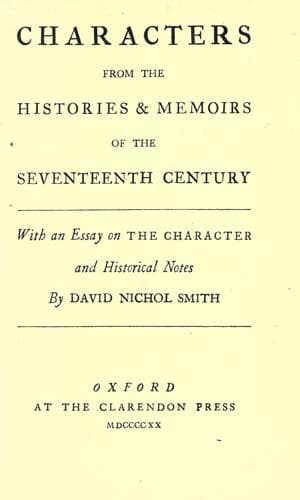
Characters from the Histories & Memoirs of the Seventeenth Century
History
Characters from the Histories & Memoirs of the Seventeenth Century
Great Britain -- Biography; Great Britain -- History -- Stuarts, 1603-1714
But I know not by what frowardnesse in his starres,
he tooke more paynes in examininge and enquiringe into other mens
offices, then in the discharge of his owne, and not so much joy in
what he had, as trouble and agony for what he had not. The truth is,
he had so vehement a desyre to be the sole favorite, that he had
no relish of the power he had, and in that contention he had many
ryvalls, who had creditt enough to do him ill offices, though not
enough to satisfy ther owne ambition, the Kinge himselfe beinge
resolved to hold the raynes in his owne handes, and to putt no further
trust in others, then was necessary for the capacity they served
in: which resolution in his Majesty was no sooner believed, and the
Treasurers prsetence taken notice,[3] then he founde the number of
his enimyes exceedingly increased, and others to be lesse eager in the
pursuite of his frendshipp; and every day discovered some infirmityes
in him, which beinge before knowne to few, and not taken notice,[3]
did now expose him both to publique reproch, and to private
animosityes, and even his vices admitted those contradictions in them,
that he could hardly injoy the pleasante fruite of any of them. That
which first exposed him to the publique jealosy, which is alwayes
attended with publique reproch, was the concurrent suspicion of
his religion. His wife and all his daughters were declared of the
Roman religion, and though himselfe and his Sunns sometimes went to
church, he was never thought to have zeale for it, and his domestique
conversation and dependants, with whome only he used intire freedome,
were all knowne Catholiques, and were believed to be agents for the
rest; and yett with all this disadvantage to himselfe, he never had
reputation and creditt with that party, who were the only people of
the kingdome, who did not believe him to be of ther profession, for
the penall lawes (those only excepted, which were sanguinary, and even
those sometimes lett loose) were never more rigidly executed, nor had
the Crovme ever so greate a revennue from them, as in his tyme, nor
did they ever pay so deere for the favours and indulgencyes of his
office towards them.
Public-domain text, read in full here on John Shaqi.
Reviews
Reviews
No reviews yet
Be the first to share your thoughts on this work.
Elsewhere in the archive
Join the Discussion
Join the discussion
Sign in to leave a comment or review.
Sign InorCreate an account