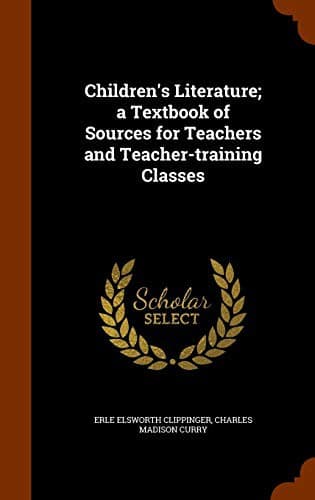
Children's Literature: A Textbook of Sources for Teachers and Teacher-Training ClassesCurry, Charles Madison
General
Children's Literature: A Textbook of Sources for Teachers and Teacher-Training Classes
Curry, Charles Madison
Children -- Books and reading; Children's literature -- Study and teaching
The ill-fated Oscar Wilde (1856-1900) was born
in Ireland, was educated at Oxford, came into
great notoriety as the reputed leader of the
"aesthetic movement," was prominent in the
London literary world from 1885 to 1895, fell
under the obloquy of most of his countrymen,
and died in distressing circumstances in Paris.
In addition to some remarkable plays, poems,
and prose books, he wrote a number of unusual
stories especially fascinating to children,
which were collected under the title _The Happy
Prince, and Other Tales_. These stories were at
once recognized as classic in quality. While
they contain much implied criticism of certain
features of modern civilization, the whole tone
is so idealistic and the workmanship so fine
that they convey no strong note of bitterness
to the child. "The Happy Prince" suggests that
Wilde saw on the one hand "the white faces of
starving children looking out listlessly at the
black streets"; while on the other hand he saw
the Pyramids, marble angels sculptured on the
cathedral tower, and the gold-covered statue of
the Prince of the Palace of the Care-Free.
Wilde also suggests a remedy for the starvation
and wretchedness that exist, especially among
children, in most cities where great wealth is
displayed. The important thing in presenting
this story to children is to get the full
sympathetic response due to the sacrifice made
by the Happy Prince and the little swallow. So
much of the effect depends upon the wonderful
beauty of the language that teachers will, as a
rule, get better results from reading or
reciting than from any kind of oral paraphrase.
Another story in this same volume widely and
successfully used by teachers is the one called
"The Selfish Giant."
THE HAPPY PRINCE
OSCAR WILDE
High above the city, on a tall column, stood the statue of the Happy
Prince. He was gilded all over with thin leaves of fine gold, for eyes
he had two bright sapphires, and a large red ruby glowed on his
sword-hilt.
He was very much admired indeed. "He is as beautiful as a weathercock,"
remarked one of the Town Councillors who wished to gain a reputation for
having artistic tastes; "only not quite so useful," he added, fearing
lest people should think him unpractical, which he really was not.
"Why can't you be like the Happy Prince?" asked a sensible mother of her
little boy who was crying for the moon. "The Happy Prince never dreams
of crying for anything."
"I am glad there is some one in the world who is quite happy," muttered
a disappointed man as he gazed at the wonderful statue.
Public-domain text, read in full here on John Shaqi.
Reviews
Reviews
No reviews yet
Be the first to share your thoughts on this work.
Elsewhere in the archive
Join the Discussion
Join the discussion
Sign in to leave a comment or review.
Sign InorCreate an account