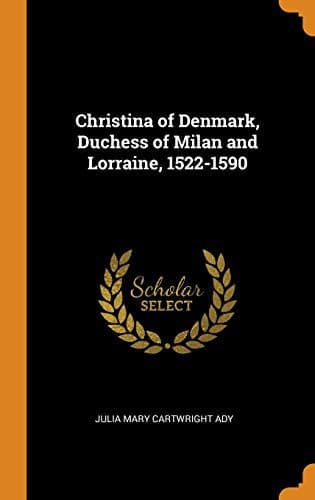
Christina of Denmark, Duchess of Milan and Lorraine, 1522-1590Cartwright, Julia
History
Christina of Denmark, Duchess of Milan and Lorraine, 1522-1590
Cartwright, Julia
Christine, Duchess, consort of Francis I, Duke of Lorraine, 1521-1590; Europe -- History -- 1517-1648
Meanwhile Arras and Egmont returned to Brussels, satisfied that the
French had no real wish for peace, and Philip declared his conviction
that they had made a plot to capture the Duchess, which had only
been defeated by the strong escort with which she was attended.
But Christina herself was radiant with happiness, and received
congratulations from all her friends. The French had done her many
cruel wrongs, but they had not been able to rob her of her son's heart,
and the future still held the promise of some golden hours.
[Sidenote: JUNE, 1558] THE PRINCE OF ORANGE]
For a while the war still raged fiercely. The capture of Thionville
by Guise in June was followed a month later by Egmont's fresh victory
at Gravelines, when the Governor of Calais, De Thermes, and his whole
force, were cut to pieces. The Count had always been a splendid and
popular figure; now he was the idol of the whole nation. His brilliant
feat of arms had saved Flanders from utter ruin, and made peace once
more possible. Both sides were thoroughly weary of the long struggle,
the resources of both countries were exhausted, and the unhappy
inhabitants of Picardy and Artois were crying out for a respite from
their sufferings. Christina made use of the opportunity to renew her
correspondence with the Constable and the Marshal St. André, his
companion in captivity.[536] A new recruit now came to her help in
the person of William of Orange. This young Prince had enjoyed the
favour of Charles V. and his sister Mary from his boyhood, and had
been treated with especial kindness by the Duchess of Aerschot and
her sister-in-law. The death of his young wife, Anna, Countess Büren,
in the spring of 1558, had thrown him much into the company of these
ladies, and it was already whispered at Court that he would certainly
marry Madame de Lorraine's elder daughter, Renée, who was growing up
a tall and attractive maiden. The Prince himself was a handsome youth
with fine brown eyes and curly auburn locks, and a charm of manner
which few could resist. If the cares and anxieties of his later life
made him taciturn, in youth he was the most genial and pleasant of
companions, and Arras, who never loved him, said that he "made a friend
every time that he lifted his hat." His attire was always as faultless
as it was splendid, he was renowned for his skill as a rider and
jouster, and had greatly distinguished himself in the recent campaigns.
Both in his home at Breda and in the stately Nassau house at Brussels
the Prince kept open house, and the worst faults of which his enemies
could accuse him were his reckless hospitality and extravagant tastes.
Public-domain text, read in full here on John Shaqi.
Reviews
Reviews
No reviews yet
Be the first to share your thoughts on this work.
Elsewhere in the archive
Join the Discussion
Join the discussion
Sign in to leave a comment or review.
Sign InorCreate an account