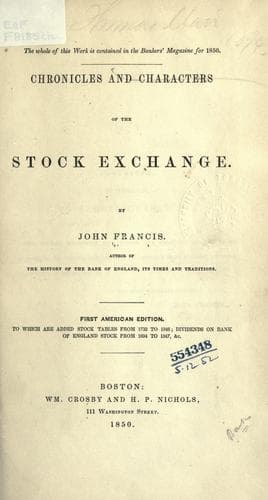
Chronicles and characters of the stock exchangeFrancis, John, of the Bank of England
History
Chronicles and characters of the stock exchange
Francis, John, of the Bank of England
Speculation; Stock Exchange (London, England)
Time, instead of softening or subduing the misery, had extended
its ramifications into the highest, as it once had been confined
to the lowest, society. The middle class—ordinarily supposed to be
freest from vice—had gradually succumbed. The penniless miscreant
of one day became the opulent gambler of the next; and the drawing
of the lotteries might be marked by the aspect of the pawnbrokers’
shops, which overflowed with the goods of the laborer, with the
ornaments of the middle class, and with the jewels of the rich.
Servants went to distant places with the purloined property of their
masters, pledged it, and, destroying the tickets, insured in the
lottery. Manufacturers discharged those workmen who could not resist
the temptation. During the drawing of the prizes less labor was
done by the artisans. Housekeepers of the lower order were unable
to pay their taxes; money was begged from benevolent societies;
and men, pretending they were penniless, were fed and housed by
the parish while embarking in these chimerical schemes. Felons,
on the morning of an ignominious death, named lotteries as the
first cause; and often, if a dream pointed to a particular number,
crimes were committed to procure it, which led to transportation
instead of fortune. Individuals presented themselves to insure,
with such unequivocal marks of poverty in their appearance, that
even the office-keepers refused their money; and yet, such was the
indefatigable love of adventure, that many would come in at one door
as fast as they were shown out at the other.
“When I have caught a great many in a room together,” said one
witness, “I have found most of them poor women, and in their pockets
twenty or thirty, and even sixty, duplicates on one person. Their
pillows, their bolsters, their very clothes, were pledged, till they
were almost naked.”
“First,” said Mr. Sheridan, “they pawned ornaments and superfluities,
then their beds, the very clasps of their children’s shoes, the very
clothes of the cradle. The pawnbroker grew ashamed of his profession.”
A walk near the spot where the prizes were announced painfully
evinced the progress this terrible delusion had made, and the classes
to which it had extended.
Public-domain text, read in full here on John Shaqi.
Reviews
Reviews
No reviews yet
Be the first to share your thoughts on this work.
Elsewhere in the archive
Join the Discussion
Join the discussion
Sign in to leave a comment or review.
Sign InorCreate an account