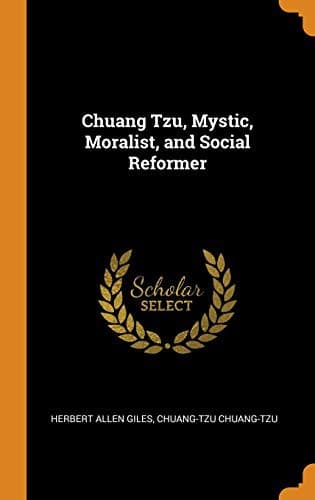
Chuang Tzu: Mystic, Moralist, and Social ReformerZhuangzi
Religion
Chuang Tzu: Mystic, Moralist, and Social Reformer
Zhuangzi
Ethics -- China; Philosophy, Chinese
Yang Chu, a philosopher of the fourth century B.C., whose "selfish"
system was condemned by Mencius; and Mih Tzŭ, already mentioned in ch.
ii.
Therefore every addition to or deviation from nature belongs not to the
ultimate perfection of all.
Which is in TAO.
He who would attain to such perfection never loses sight of the natural
conditions of his existence. With him the joined is not united, nor
the separated apart, nor the long in excess, nor the short wanting.
For just as a duck's legs, though short, cannot be lengthened without
pain to the duck, and a crane's legs, though long, cannot be shortened
without misery to the crane, so that which is long in man's moral
nature cannot be cut off, nor that which is short be lengthened. All
sorrow is thus avoided.
Intentional charity and intentional duty to one's neighbour are surely
not included in our moral nature. Yet what sorrow these have involved.
Divide your joined toes and you will howl: bite off your extra finger
and you will scream. In one case there is too much, in the other too
little; but the sorrow is the same. And the charitable of the age go
about sorrowing over the ills of the age, while the non-charitable cut
through the natural conditions of things in their greed after place and
wealth. Surely then intentional charity and duty to one's neighbour
are not included in our moral nature. Yet from the time of the Three
Dynasties downwards what a fuss has been made about them!
Those who cannot make perfect without arc, line, compasses, and square,
injure the natural constitution of things. Those who require cords
to bind and glue to stick, interfere with the natural functions of
things. And those who seek to satisfy the mind of man by hampering with
ceremonies and music and preaching charity and duty to one's neighbour,
thereby destroy the intrinsicality of things.
For such intrinsicality does exist, in this sense:--Things which
are curved require no arcs; things which are straight require no
lines; things which are round require no compasses; things which are
rectangular require no squares; things which stick require no glue;
things which hold together require no cords. And just as all things are
produced, and none can tell how they are produced, so do all things
possess their own intrinsic qualities and none can tell how they
possess them. From time immemorial this has always been so, without
variation. Why then should charity and duty to one's neighbour be as it
were glued or corded on, and introduced into the domain of TAO, to give
rise to doubt among mankind?
Lesser doubts change the rule of life; greater doubts change man's
nature.
How do we know this? By the fact that ever since the time when Shun bid
for charity and duty to one's neighbour in order to secure the empire,
men have devoted their lives to the pursuit thereof. Is it not then
charity and duty to one's neighbour which change the nature of man?
Public-domain text, read in full here on John Shaqi.
Reviews
Reviews
No reviews yet
Be the first to share your thoughts on this work.
Elsewhere in the archive
Join the Discussion
Join the discussion
Sign in to leave a comment or review.
Sign InorCreate an account