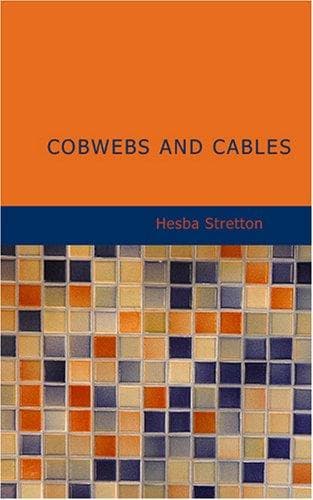
Bankers -- Fiction; Christian life -- Fiction; Fraud -- Fiction; Fugitives from justice -- Fiction
As the dark stormy days passed on he sometimes put a touch or two to the
outstretched wings of his swooping hawk, but it did not get on fast.
With a pathetic clinging to Phebe he seldom let her stay long out of his
sight, but followed her about like a child, or sat on the hearth
watching her as she went about her house-work. Only by those unconscious
sobs and outcries, inaudible to himself, did he betray the grief that
was gnawing at his heart. Very often did Phebe put aside her work, and
standing before him ask such questions as the following on her swiftly
moving fingers.
"Don't you believe in God, our Father in heaven, the Father Almighty,
who made us?"
"Yes," he would reply by a nod.
"And in Jesus Christ, His Son, our Lord, who lived, and died for us, and
rose again?"
"Yes, yes," was the silent, emphatic answer.
"And yet you grieve and fret over the loss of money!" she would say,
with a wistful smile on her young face.
"You are a child; you know nothing," he replied.
For without a sigh the old man was going forward consciously to meet
death. Every morning when the dawn awoke him he felt weaker as he rose
from his bed; every day his sight was dimmer and his hand less steady;
every night the steep flight of stairs seemed steeper, and he ascended
them feebly by his hands as well as feet. He could not bring himself to
write upon his slate or to spell out upon his fingers the dread words,
"I am dying;" and Phebe was not old or experienced enough to read the
signs of an approaching death. That her father should be taken away from
her never crossed her thoughts.
It was the vague, mournful prospect of soon leaving her alone in the
wide world that made his loss loom more largely and persistently before
the dumb old man's mind. Certainly he believed all that Phebe said to
him. God loved her, cared for her, ordered her life; yet he, her father,
could not reconcile himself to the idea of her being left penniless and
friendless in the cold and cruel world. He could have left her more
peacefully in God's hands if she had those six hundred pounds of his
earnings to inherit.
The sad winter wore slowly away. Now and then the table-land around them
put on its white familiar livery of snow, and old Marlowe's dim eyes
gazed at it through his lattice window, recollecting the winters of long
years ago, when neither snow nor storm came amiss to him. But the slight
sprinkling soon melted away, and the dun-colored fog and cloudy curtain
shut them in again, cutting them off from the rest of the world as if
their little dwelling was the ark stranded on the hill's summit amid a
waste of water.
CHAPTER XXI.
PLATO AND PAUL.
Public-domain text, read in full here on John Shaqi.
Reviews
Reviews
No reviews yet
Be the first to share your thoughts on this work.
Elsewhere in the archive
Join the Discussion
Join the discussion
Sign in to leave a comment or review.
Sign InorCreate an account