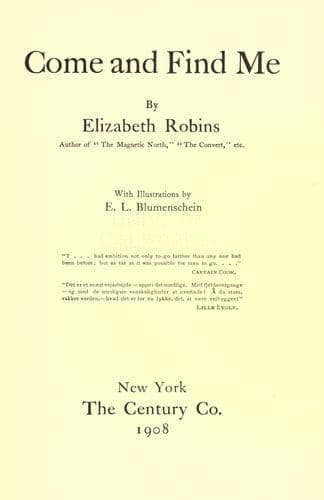
Alaska -- Fiction; California -- Fiction; Gold mines and mining -- Fiction
The ship was badly lit and silent as the grave. Hildegarde felt her way
down into the saloon, where a single light was burning. She found her
cabin, and she put a jacket and a suit-case in her berth. On reflection,
to make it look the more occupied, she added a green felt hat with her
card stuck in the narrow band. Then out into the dim saloon. How strange
for her to be in this place. So strange, she had a fleeting notion she
would presently wake up and find herself in the little white room at
home. But no, for the purser, who appeared and disappeared like some
incorporeal essence, was standing at the door of the saloon with a pile
of letters and telegrams, and little packets, saying: “There’s flowers,
too, an’ a box o’ fruit an’ a basket. When the steward comes, I’ll send
them to your room.”
Last letters from the few who had been allowed to know the name of her
ship, from her mother and the boys, from Bella, from Eddie Cox—no one had
forgotten her except— He might come yet. Even Bella’s mother had sent a
telegram, saying she hoped Hildegarde would find the traveling tea-basket
a slight solace. Bella sent fruit, and wrote: “Come back as much the same
Hildegarde as you can. You won’t be quite the same I know. No one is
after a great journey. Too much happens. No, I shan’t ever see you again,
dearest of all my friends, but let the Hildegarde that you bring home be
as much like the old Hildegarde as you can manage.”
These letters, the last echo of the old voices. Why did she hear plainest
of all the one who was silent.
What was this! Homesick already, and the anchor not yet weighed?
Public-domain text, read in full here on John Shaqi.
Reviews
Reviews
No reviews yet
Be the first to share your thoughts on this work.
Elsewhere in the archive
Join the Discussion
Join the discussion
Sign in to leave a comment or review.
Sign InorCreate an account