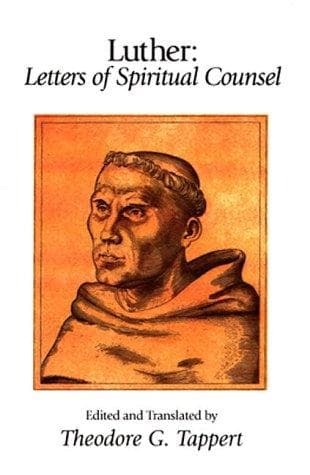
Commentary on Genesis, Vol. 1: Luther on the CreationLuther, Martin
ReligionChristian
Commentary on Genesis, Vol. 1: Luther on the Creation
Luther, Martin
Bible. Genesis -- Commentaries
My answer therefore to all questioners upon the passage before us is:
There is the Nile, there is the Ganges and there are other rivers
still in existence; but they are not now such as they once were; they
are not only confounded with respect to their sources, but altered as
to their qualities also. In the same manner also man has indeed feet,
eyes and ears, just as they were created and formed in paradise; but
all these same members are miserably corrupted and marred by sin. Adam
before his sin had eyes the most bright, a smell of body the most
pure, refined, delicate and grateful; a body the most perfectly
adapted to generation and to every purpose intended of God without the
least let, hindrance or obstruction in the performance of those
purposes as services in obedience to God. But how far removed from all
this aptitude, this service and this natural vigor are all our members
now! Just the same is the present nature of these rivers and of the
whole creation if compared with its original state and condition.
Let us look therefore in hope and faith for the "restitution of all
things;" not of the soul only, but of the body also; believing that we
shall have in that day a body better and more noble even than it was
when first created in paradise. For we shall not then be placed in a
state of animal life, subject by its nature to alteration and change;
but in the state and enjoyment of a spiritual life; that life, into
which Adam would have been translated, if he had lived without sin.
Into the hope of this life Christ brings us by the remission of sins;
and thereby makes our condition better and higher than Adam enjoyed,
but lost in paradise.
The Hebrew verb SAB, which Moses here uses, has a very extensive
meaning; it signifies "to go round," as watchmen go their round in a
city. Pishon, therefore, or the Ganges is still in existence, if you
speak of its mere name and stream; but if you consider its fertilizing
and fructifying qualities, its various other properties and the course
of its waters, even the remnants of the original noble river are not
to be found.
The land of Havilah is India, situated towards the east. This country
is celebrated both in the present passage and in other places in the
Scripture as most rich and abundant in every respect. So that at this
day the gems and the gold of India are considered the most precious
and most noble. I believe however, according to the phraseology here
adopted by Moses, that in "the land of Havilah" is included Arabia
Felix and other adjacent regions.
Public-domain text, read in full here on John Shaqi.
Reviews
Reviews
No reviews yet
Be the first to share your thoughts on this work.
Elsewhere in the archive
Join the Discussion
Join the discussion
Sign in to leave a comment or review.
Sign InorCreate an account