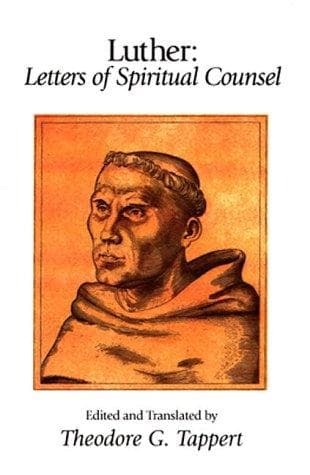
Commentary on Genesis, Vol. 1: Luther on the CreationLuther, Martin
ReligionChristian
Commentary on Genesis, Vol. 1: Luther on the Creation
Luther, Martin
Bible. Genesis -- Commentaries
To this I reply, Adam had the promise of mercy given him, and with
that he ought to have lived content. But in order that he might more
deeply fear, and more carefully guard against all future sin, there is
spoken to him this bitter memorial word also. For God foresaw what
kind of men Adam's posterity would be; and therefore he puts this word
into his mouth that he might preach it to his posterity, and might
teach them as a warning that by wishing to become like God, he became
like unto the devil; in order that they also, being thus warned, might
not add to that sin of their first parents their own sins, and so
depart still farther from God.
As before, by the clothing of skins, so now, by his word itself, God
reminds our first parents both concerning their past and their future
calamities. Not that God is delighted with Adam's sad case, for had it
been so he would have given him no such admonition at all; but would
have remained silent. But God willed that man should sigh after the
restoration of that "image of God" which he had lost; and should
therefore the more hate sin, which had been the cause of this awful
calamity; and that Adam should admonish his posterity of what had been
the consequence of his sin; that when, having been plundered of his
reason by Satan, he thought he should become like God, he became like
Satan himself.
On this passage also that great question is raised, why God, who is
one, here speaks in the plural number? And whether there are more gods
than one? And Nicholas of Lyra, with others, considers that these
words are either spoken in the person of an angel or addressed to
angels, "Is become as one of us;" that is, "Is become an angel." But
this comment is too cold. For God does not here call himself an angel.
Nor does the force of the expression lie in the word "one;" but rather
in the pronoun "us." Wherefore we repudiate altogether this cold
comment. For if these words are spoken in the person of an angel, it
is certain that God did not speak them; but God did speak them. For
the assertion of the text is, "And Jehovah God said."
Wherefore here again let us have recourse to the light of the Gospel.
For this light as I have above observed illumines all these obscure
passages of the Old Testament. And indeed if you will explain these
words as having reference to the angels, such interpretations will not
accord with that portion of the sacred narrative which precedes. For
Satan above said, verse 5, "And ye shall be as gods, knowing good and
evil." From this it is manifest that Adam and Eve really endeavored to
become like God, not like an angel. Wherefore this passage cannot
rightly be understood in any other way than as meaning equality with
God!
Public-domain text, read in full here on John Shaqi.
Reviews
Reviews
No reviews yet
Be the first to share your thoughts on this work.
Elsewhere in the archive
Join the Discussion
Join the discussion
Sign in to leave a comment or review.
Sign InorCreate an account