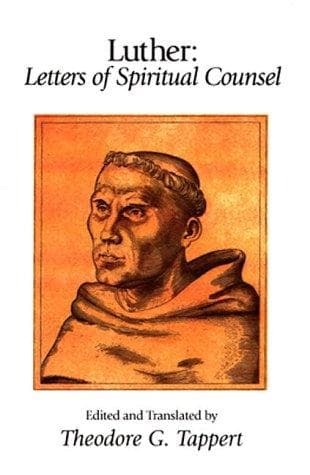
Commentary on Genesis, Vol. 1: Luther on the CreationLuther, Martin
ReligionChristian
Commentary on Genesis, Vol. 1: Luther on the Creation
Luther, Martin
Bible. Genesis -- Commentaries
It cannot be known for a certainty whether Cain and Abel were twins or
not, although it is very probable indeed that they were twins. But be
that as it may, it is certain that our first parents had various
thoughts concerning these two sons, and that they imagined that their
redemption was at the door. Cain was doubtless held in the highest
honor and made the object of their chief delight; while Abel on the
other hand was not an object of so much pleasure nor of so much hope,
as the names themselves of the two sons show. Cain was so called, as
we have said, because they considered that it was he who should
acquire or restore all things. On the contrary Abel signifies "vanity"
or "that which is nothing or of no value or abject." Some interpreters
have rendered the name in our Bible "mourning" or "sorrow;" but the
Hebrew term for sorrow is EBEL not HABEL. Moreover the expression
HEBEL is of very frequent use in the sacred Scriptures. How often is
it repeated in Ecclesiastes? "Vanity of vanities, all is vanity,"
Eccles. 1:2, and also in the Psalm, "Therefore their days did he
consume in vanity," Ps. 78:33; that is, they attained not the
"promised land" of Canaan.
Abel therefore was so called, as being considered one concerning whom
there was no hope, or one respecting whom all hope was vain. But Cain
was so named, as one of whom all things were hoped. These very names
given to these two sons therefore plainly manifest the thoughts and
feelings of the parents concerning them; that, as the promise was made
concerning the Seed of the woman, Adam and Eve thought that the divine
promise thus made was to be fulfilled through Cain, their first son;
but that Abel would effect nothing, seeing that everything was to be
successfully accomplished as they thought through Cain. Therefore they
called him Abel. And this hope which Adam and Eve entertained
concerning Cain was undoubtedly the reason why these two brothers were
not brought up with the same care and concern. For to Abel was
committed the charge of the cattle; but Cain was trained in the
pursuits of his father, and to the cultivation of the earth, as being
the superior and nobler employment. Abel was a shepherd; Cain was a
king and a priest, being the first-born and destined by his birth to
fulfil those high hopes and expectations of the recovery of all his
parents entertained concerning him.
But here ponder the wonderful counsel of God! From the beginning of
the world, primogeniture has always held a very high privilege, not
only among the people of God, with whom the right attached to
primogeniture was an institution of God himself, and by him highly
commended, but among the Gentile nations also. And yet facts and
experiences prove, especially among the holy people, that the
first-born have often disappointed the hopes of their parents and that
the after-born have often attained to the condition and dignity of the
first-born.
Public-domain text, read in full here on John Shaqi.
Reviews
Reviews
No reviews yet
Be the first to share your thoughts on this work.
Elsewhere in the archive
Join the Discussion
Join the discussion
Sign in to leave a comment or review.
Sign InorCreate an account