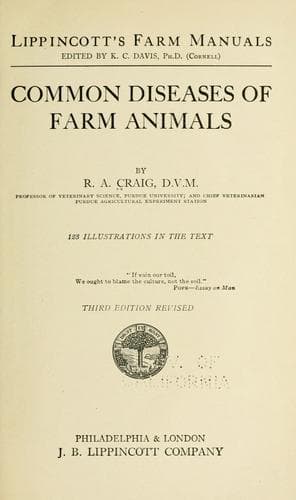
Common Diseases of Farm AnimalsCraig, Robert Alexander
Science
Common Diseases of Farm Animals
Craig, Robert Alexander
Veterinary medicine
_The hog-louse_ is the largest specie known. As well as the largest, it is
the most common of all lice found on domestic animals. The favorite points
of attack are the under surface of the body, the neck and the inside of the
thighs. The irritation and itching are severe, and the hog rubs and
scratches the skin. Young hogs suffer most from this parasite, and their
thriftiness is greatly interfered with.
The long-haired breeds of _dogs_ suffer more from lice than the
short-haired breeds. The almost constant scratching and biting of the skin
result in its becoming badly irritated and scabby. The symptoms differ
little from irritation to the skin caused by fleas, but the presence of
biting or sucking lice enables the person making the examination to
determine the cause of the irritation.
Lice are the most common parasites of _poultry_. It is uncommon to meet
with a flock of fowls that are not hosts for one or more of the many
different varieties of bird lice. Restlessness, picking, scratching,
flapping the wings, abandoning the nest and loss of condition are common
symptoms. Young birds suffer most from lice. This is especially true of
young chickens, death frequently resulting. Old fowls may show little
inconvenience unless badly infested. The finding of the lice with the head
imbedded in the skin or on the feathers enables the person making the
examination to positively diagnose the case. The head, back, region of the
vent and beneath the wings are the parts that should be carefully examined
for lice.
TREATMENT OF LOUSINESS.--The preventive treatment is very important. This
consists in carefully examining all animals or birds that have been
purchased recently, and if found to harbor lice, excluding them from the
herd or flock until after they have been properly treated.
It is impossible to rid animals of lice if the quarters are thoroughly
cleaned and disinfected. This is necessary in order to destroy lice that
have become scattered about by the lousy animals, and prevent the
reinfection of the treated animals. The best method to use in cleaning the
quarters is to remove all litter and manure from the stable or houses and
their immediate surroundings. It should be burned, or hauled to a field or
lot where other animals cannot come in contact with it for a few months.
The walls, floors and partitions should be sprayed with a three per cent
water solution of liquor cresolis compositus. Lime may be scattered about
the buildings, yards and runs. The most satisfactory method of destroying
lice on the bodies of animals is by washing or dipping in a water solution
or mixture of some reliable disinfectant or oil.
Public-domain text, read in full here on John Shaqi.
Reviews
Reviews
No reviews yet
Be the first to share your thoughts on this work.
Elsewhere in the archive
Join the Discussion
Join the discussion
Sign in to leave a comment or review.
Sign InorCreate an account