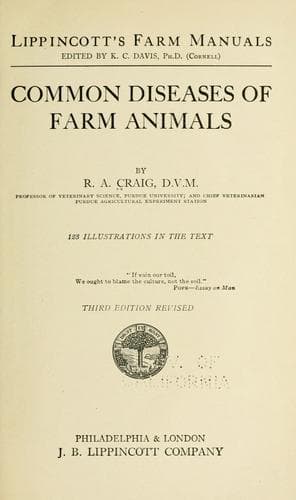
Common Diseases of Farm AnimalsCraig, Robert Alexander
Science
Common Diseases of Farm Animals
Craig, Robert Alexander
Veterinary medicine
_The treatment_ is preventive. A frequent cleaning and disinfecting of the
poultry house and surroundings, avoiding the feeding of spoiled feed, or
allowing the drinking fountains and feeding places to become filthy, are
effective preventive measures. Sick birds should be either isolated and
quarantined, or destroyed. Antiseptics may be given with the feed and
drinking water.
AVIAN DIPHTHERIA (ROUP).--This infectious disease of poultry is especially
common in chickens. It is characterized by a catarrhal and diphtheritic
inflammation of the mucous membranes of the head.
_The specific cause of roup_ has not been determined. The disease-producing
germs are present in the discharges from the nostrils, eyes and mouth, and
the body excretions of sick birds. Birds having a mild form of roup, or
that have recently recovered from it, are common carriers of the disease.
The disease is usually introduced into the flock by allowing birds exposed
at poultry shows, or recently purchased breeding stock from an infected
flock, to mix with the healthy birds.
_The predisposing causes_ are very important factors in the development of
roup. Cold, damp, draughty, poorly ventilated poultry houses cause the
disease to spread rapidly and become highly acute.
_The symptoms_ differ in character in the different outbreaks of the
disease. Usually the first symptoms noticed are sneezing, dulness,
diminished appetite and a watery discharge from the nostrils and eyes.
Later the eyelids may become swollen and the nostrils plugged by the
discharge from the inflamed membranes. If the mouth is examined at this
time, an accumulation of mucus and patches of diphtheritic or false
membranes are found. In the acute form of roup the false membranes and
yellowish, cheesy-like material accumulate on the different mucous
membranes, and interfere with vision, breathing and digestion. The affected
bird becomes thin and weak. The death rate is very high in this form of the
disease.
_The preventive treatment_ consists in quarantining birds that have been
purchased from other flocks, and that have been exhibited, for a period of
three weeks. A careful examination of the mouth should be made. If a
catarrhal discharge from the nostrils and false membranes is present,
prompt treatment should be used. A sick bird should be held in quarantine
for several weeks after it has recovered, and receive a thorough washing in
a two per cent water solution of a cresol disinfectant before allowing it
to mix with the healthy birds.
Public-domain text, read in full here on John Shaqi.
Reviews
Reviews
No reviews yet
Be the first to share your thoughts on this work.
Elsewhere in the archive
Join the Discussion
Join the discussion
Sign in to leave a comment or review.
Sign InorCreate an account