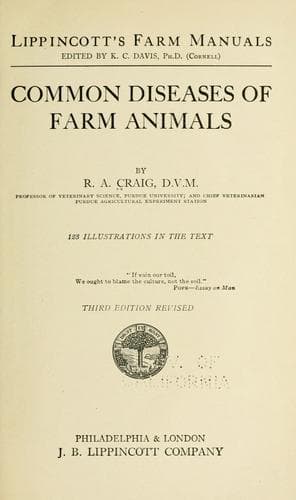
Common Diseases of Farm AnimalsCraig, Robert Alexander
Science
Common Diseases of Farm Animals
Craig, Robert Alexander
Veterinary medicine
The disease-producing germs are present in the body of the foetus, the
fetal membranes, the discharge from the maternal passages, the faeces and
milk of aborting animals. The male may carry the infection in the sheath,
urethra and on the penis. The natural avenues of infection are the maternal
passages and digestive tract.
It is very seldom that abortion is carried from one herd to another by
means other than through the breeding of animals free from abortion to
animals affected by this disease. The purchase of a bull or cow from an
infected herd and breeding them to animals that are free from disease, is a
common method of spreading the disease. After serving the diseased animal,
the male may carry the bacillus of abortion into the maternal passages of
the next cow he serves. There are numerous cases on record where the bull
was a permanent carrier of the Bacillus abortus and infected nearly every
animal served. The distribution of the disease in the herd following the
introduction of a cow, sow, or ewe that has aborted before or after being
purchased, takes place through contact of the other animals with the virus
that may be present on the floor, or in the manure, or by taking the virus
into the digestive tract along with the feed and drinking water.
Experimental evidence indicates the latter avenue of infection.
The stallion is the most common source of infectious abortion in mares. An
infected stallion may distribute the disease to a large percentage of the
mares that he serves. For this reason nearly all of the mares in a certain
locality may abort.
In case the infection occurs at the time of service, the abortion usually
takes place during the first half of the period of pregnancy. Cows that
become pregnant without recovering from the inflammation of the lining
membrane of the genital tract, may abort at a very early period. McFadyean
and Stockman from the artificially inoculated cases of infectious abortion
in cows, showed that the period of incubation averaged 126 days.
_The symptoms of accidental abortion_ are extremely variable. Animals that
abort during the early periods of pregnancy may show so little disturbance,
that the animal can be treated as if nothing had happened. During the
latter half of pregnancy, and especially when the accident is caused by an
injury, the symptoms are more serious. Loss of appetite, dulness,
restlessness, abdominal pain and haemorrhage are the symptoms commonly
noted. If the foetus is dead, it may be necessary to assist the animal in
expelling it. In the latter case, death of the mother may occur.
A slight falling of the flanks, swelling of the lips of the vulva and a
retention of the fetal membranes, or discharge from the vulva may be the
only symptoms noted at the time abortion occurs.
Public-domain text, read in full here on John Shaqi.
Reviews
Reviews
No reviews yet
Be the first to share your thoughts on this work.
Join the Discussion
Join the discussion
Sign in to leave a comment or review.
Sign InorCreate an account