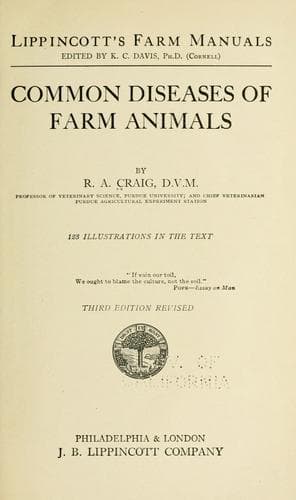
Common Diseases of Farm AnimalsCraig, Robert Alexander
Science
Common Diseases of Farm Animals
Craig, Robert Alexander
Veterinary medicine
_The course of croupous pneumonia_ is typical, and unless it terminates
fatally in the first stage, the periods of congestion, hepatization and
resolution follow each other in regular manner. Auscultation of the lungs
is of great value in diagnosing and watching the progress of the disease.
It is more difficult to determine the character of the lung sounds in the
horse and cow than it is in the small animals. This is especially difficult
if the animal is fat. During the period of _congestion_ which lasts about a
day, one can hear both healthy and crepitating sounds. The period of
_hepatization_ is characterized by an absence of sound over the diseased
area. The inflammatory exudates become organized at the beginning of this
stage, and the air can not enter the air cells. This period lasts several
days. _Resolution_ marks the beginning of recovery or convalescence. Toward
the end of the second period, the inflammatory exudate in the air cells has
begun to degenerate. In the last stage, these exudates undergo liquefaction
and are absorbed, or expelled by coughing, in from seven days to two weeks,
depending on the extent of the inflammation and the general condition of
the animal.
_In the subacute form_ the symptoms are mild and may subside within a week.
Sometimes _abscesses_ form in the lung. _Gangrenous inflammation_ of the
lung can be recognized by the odor of the expired air and the severity of
the symptoms. This form of pneumonia terminates fatally. If the larger
portion of the lung tissue is inflamed, death from asphyxia may occur in
the second stage.
The success in the _treatment_ of pneumonia depends largely on the care.
Properly ventilated, clean, comfortable quarters and careful nursing are
highly important. Large animals should be given a roomy box stall. Cold
does not aggravate pneumonia, providing the animal's body is well protected
with blankets and the limbs bandaged. Wet, damp quarters and draughts are
injurious. Hogs should be given plenty of bedding to burrow in. A light,
easily digested diet should be fed. Very little roughage should be fed. If
the animal does not eat well, it may be given eggs and milk. Weak pulse
beats should be treated by giving digitalis and strychnine.
Counterirritation to the chest wall is indicated. During convalescence,
bitter tonics may be given. Constipation should be treated by giving the
animal castor or linseed oil.
PLEURISY.--Inflammation of the pleura is most common in horses. It occurs
in all farm animals and is frequently unilateral. There are two forms of
pleurisy, acute and chronic. Pleuropneumonia is common when the cause is a
specific germ. This occurs in tuberculosis, pleuropneumonia of horses and
pneumococcus infection.
_The common causes_ are exposure to cold, chilling winds, draughty, damp
quarters, and drinking cold water when perspiring. Injuries to the costal
pleura by fractured ribs and punctured wounds may cause it to become
inflamed.
Public-domain text, read in full here on John Shaqi.
Reviews
Reviews
No reviews yet
Be the first to share your thoughts on this work.
Elsewhere in the archive
Join the Discussion
Join the discussion
Sign in to leave a comment or review.
Sign InorCreate an account