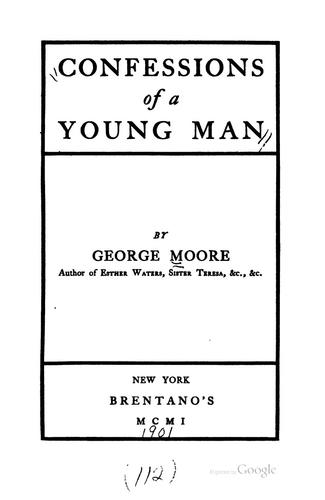
Moore, George, 1852-1933; Paris (France) -- Intellectual life
But the reading of "Lorna Doone" calls to my mind, and very vividly, an
original artistic principle of which English romance writers are either
strangely ignorant or neglectful, viz., that the sublimation of the
_dramatis personae_ and the deeds in which they are involved must
correspond, and their relationship should remain unimpaired. Turner's
"Carthage" is nature transposed and wonderfully modified. Some of the
passages of light and shade there--those of the balustrade--are fugues, and
there his art is allied to Bach in sonority and beautiful combination.
Turner knew that a branch hung across the sun looked at separately was
black, but he painted it light to maintain the equipoise of atmosphere. In
the novel the characters are the voice, the deeds are the orchestra. But
the English novelist takes 'Arry and 'Arriet, and without question allows
them to achieve deeds; nor does he hesitate to pass them into the realms of
the supernatural. Such violation of the first principles of narration is
never to be met with in the elder writers. Achilles stands as tall as Troy,
Merlin is as old and as wise as the world. Rhythm and poetical expression
are essential attributes of dramatic genius, but the original sign of race
and mission is an instinctive modulation of man with the deeds he attempts
or achieves. The man and the deed must be cognate and equal, and the
melodic balance and blending are what first separate Homer and Hugo from
the fabricators of singular adventures. In Scott leather jerkins, swords,
horses, mountains, and castles harmonise completely and fully with food,
fighting, words, and vision of life; the chords are simple as Handel's, but
they are as perfect. Lytton's work, although as vulgar as Verdi's is, in
much the same fashion, sustained by a natural sense of formal harmony; but
all that follows is decadent,--an admixture of romance and realism, the
exaggerations of Hugo and the homeliness of Trollope; a litter of ancient
elements in a state of decomposition.
Public-domain text, read in full here on John Shaqi.
Reviews
Reviews
No reviews yet
Be the first to share your thoughts on this work.
Elsewhere in the archive
Join the Discussion
Join the discussion
Sign in to leave a comment or review.
Sign InorCreate an account